The Silk Road: How Central Asia Became the World's Crossroads
For over a thousand years, no region on Earth sat at a more consequential intersection than Central Asia. Long before "globalization" was a word, the network of caravan routes historians call the Silk Road turned this stretch of steppe, desert, and mountain into the connective tissue between the Roman world, Persia, India, and China — and its cities didn't just sit along the route. They were the route.
More Roads Than One
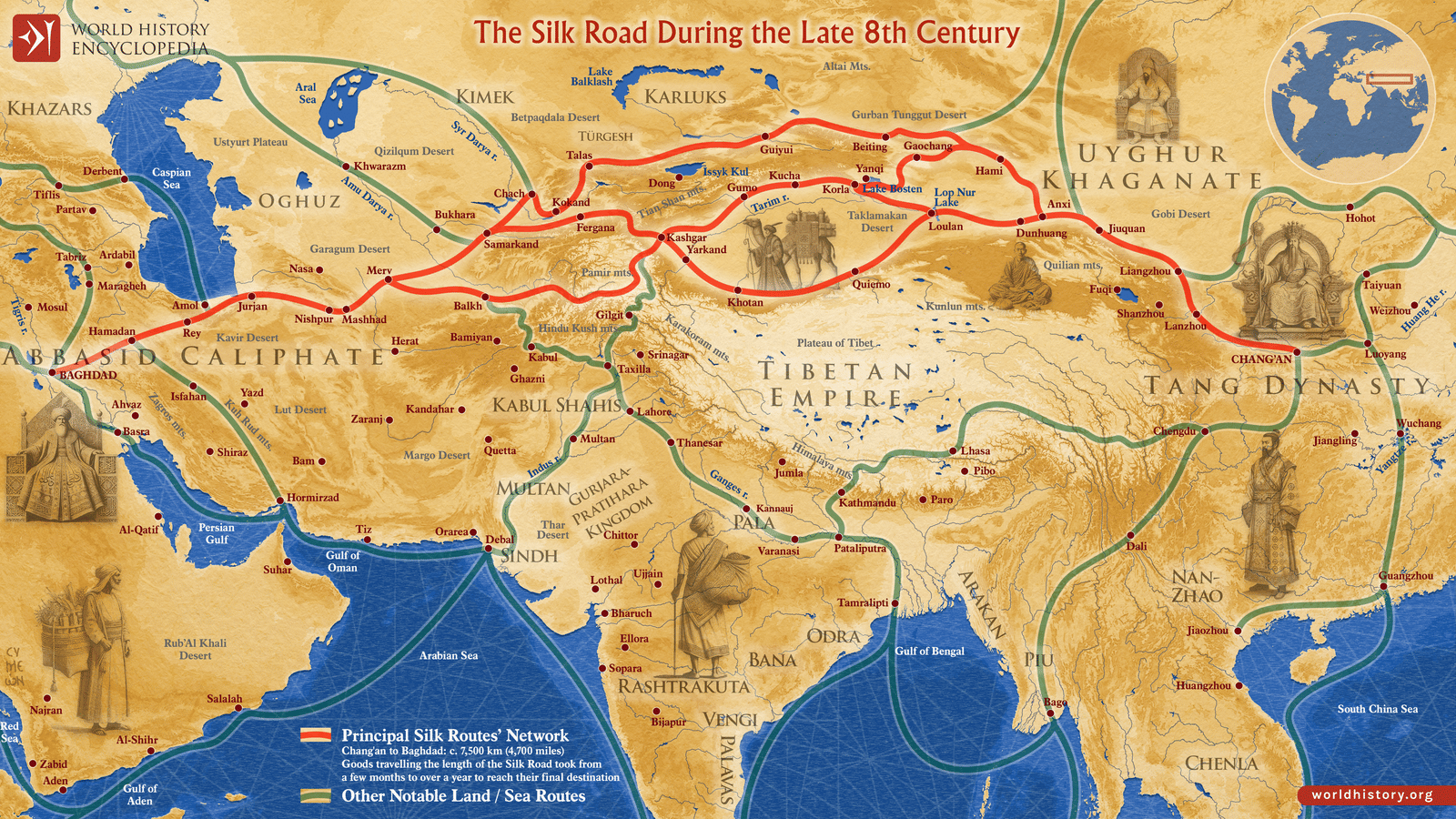
Despite the singular name, the Silk Road was never a single path. It was a shifting web of caravan tracks, first taking shape in the archaeological record around the 2nd century BCE and remaining active in various forms until the mid-15th century. Starting from Chang'an (modern Xi'an) in China, the routes stretched roughly 6,400 kilometers west, splitting and rejoining depending on politics, weather, and safety. One northern branch crossed the Tian Shan and Pamir mountains before reaching the great oasis cities of Central Asia — Kashgar, then on to Termez, Kokand, Samarkand, and Bukhara in present-day Uzbekistan, and Merv in present-day Turkmenistan — before continuing toward Baghdad and, eventually, the Mediterranean.
The name itself is a modern invention: 19th-century German geographer Ferdinand von Richthofen coined "die Seidenstraße" — the Silk Road — in the 1870s, centuries after the network's peak.
The Middlemen of the World
Central Asia's role was never passive. As Western demand for Chinese silk grew during the 1st and 2nd centuries CE, local populations across the region increasingly became the essential middlemen between the Roman and Han Chinese worlds — no merchant traveled the entire route start to finish. Goods changed hands repeatedly along the way, and nowhere more so than at the Central Asian oasis cities.
The Sogdians, an ancient Persian trading civilization based in what is now Samarkand and Bukhara, became perhaps the most famous of these intermediaries — celebrated across Eurasia for their linguistic skill and negotiating ability, and instrumental in moving not just silk, but gold, glass, spices, and ideas in both directions.
More Than Silk
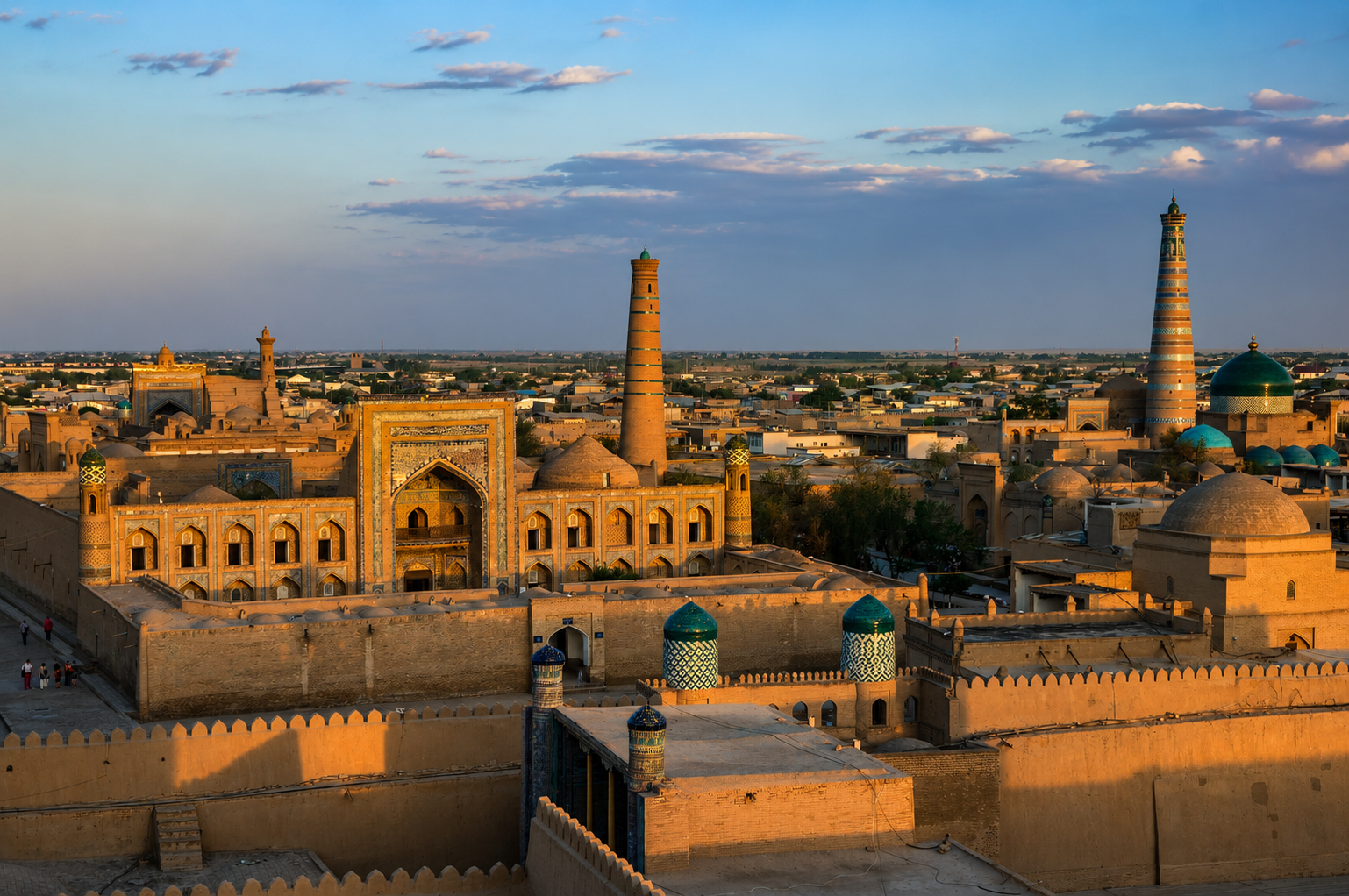
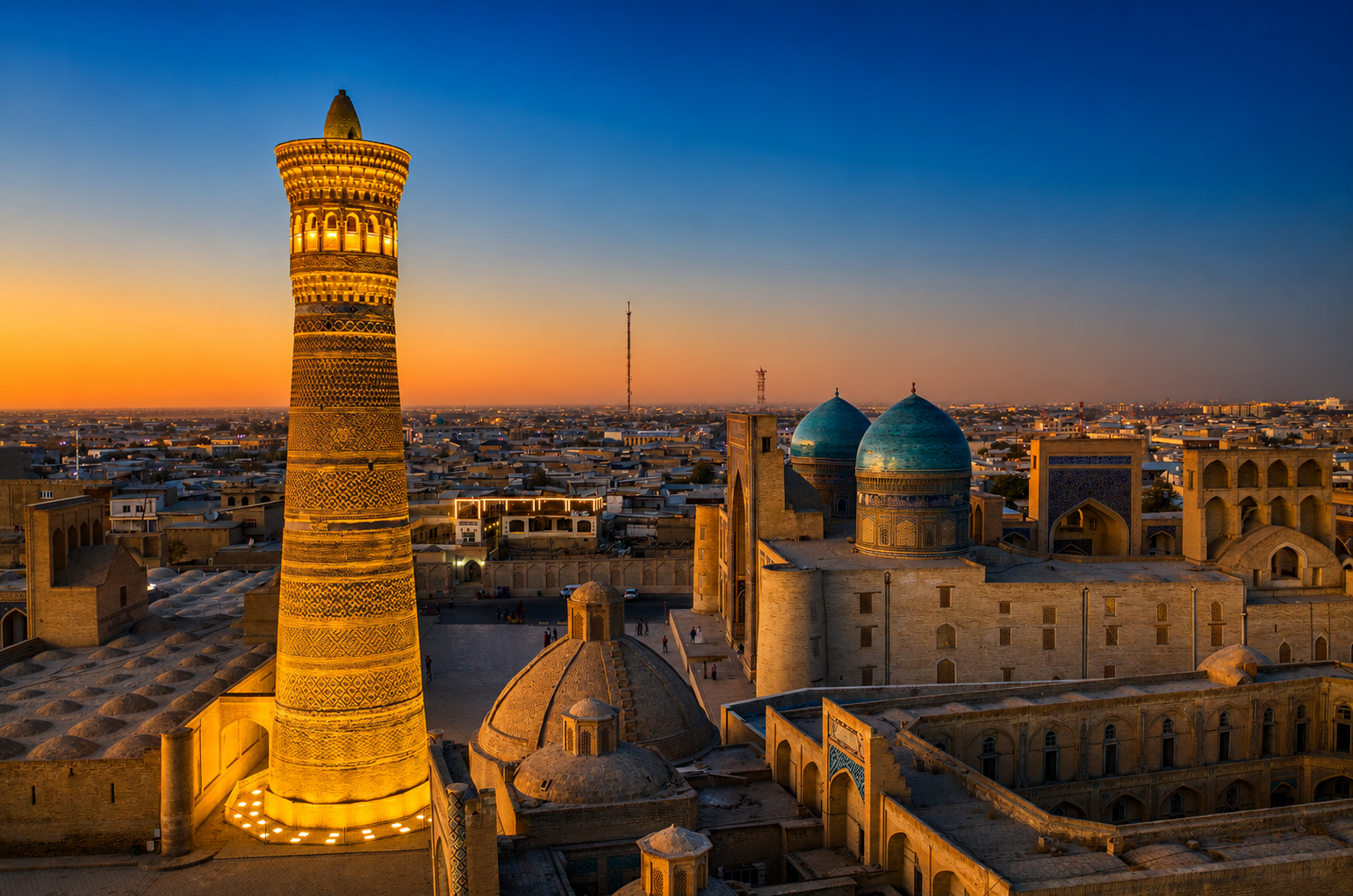
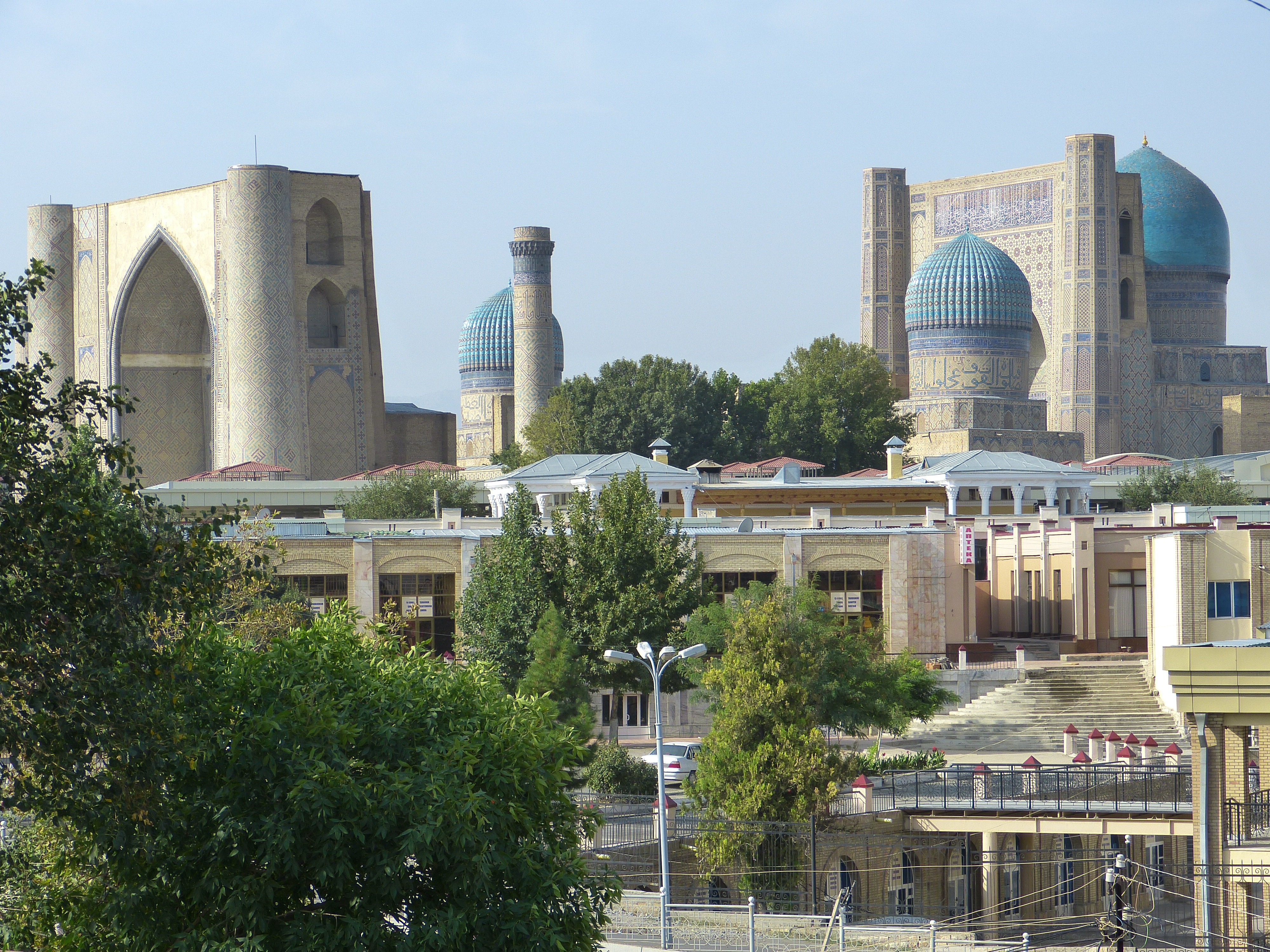
Silk moved west; wool, gold, silver, ivory, and glass moved east. But the Silk Road's deepest legacy wasn't material — it was intellectual. Buddhism reached China via Central Asia and India; Nestorian Christianity spread eastward alongside merchant caravans; papermaking technology, first developed in China, traveled west along these same routes and eventually reshaped Europe. Central Asia's oasis cities became genuinely cosmopolitan meeting points, where languages, religions, and artistic traditions blended in ways visible today in the region's architecture and archaeology.
A Legacy UNESCO Still Protects
Central Asia's role as Silk Road crossroads is formally recognized today: in 2014, UNESCO inscribed the "Silk Roads: the Routes Network of Chang'an-Tianshan Corridor" as a transnational World Heritage Site — a 5,000-kilometer stretch spanning China, Kazakhstan, and Kyrgyzstan, encompassing 33 individual sites. Uzbekistan, Tajikistan, and Turkmenistan have pursued a separate corridor application for their own historic Silk Road cities, reflecting just how much of this shared heritage still lies across the wider Central Asian region.
For today's traveler, walking through Bukhara, Samarkand, or Merv means walking through what was, for over a millennium, the busiest and most consequential crossroads on the planet — a place where East didn't just meet West, but was actively built by the exchange between them.