Abiverd: The Border Fortress of Ancient Khorasan
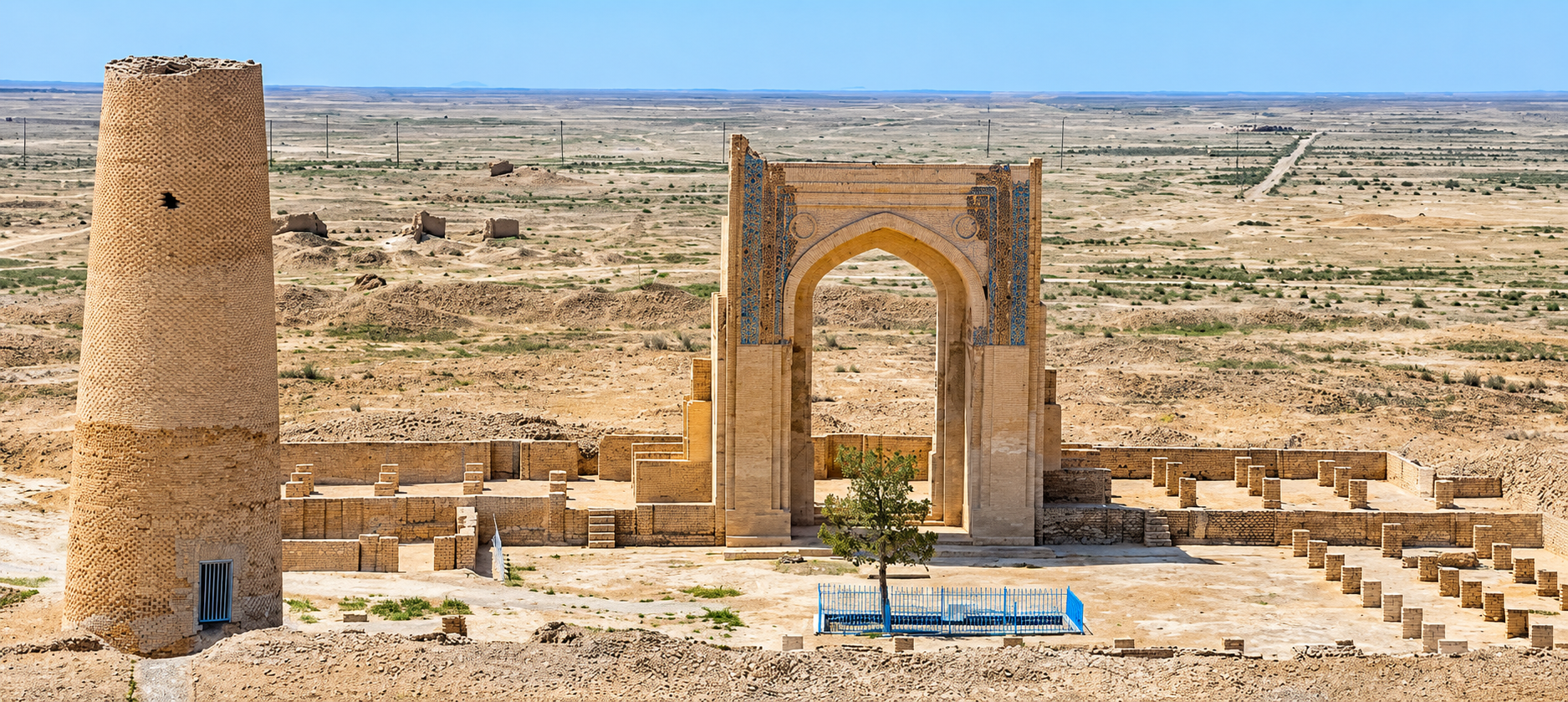
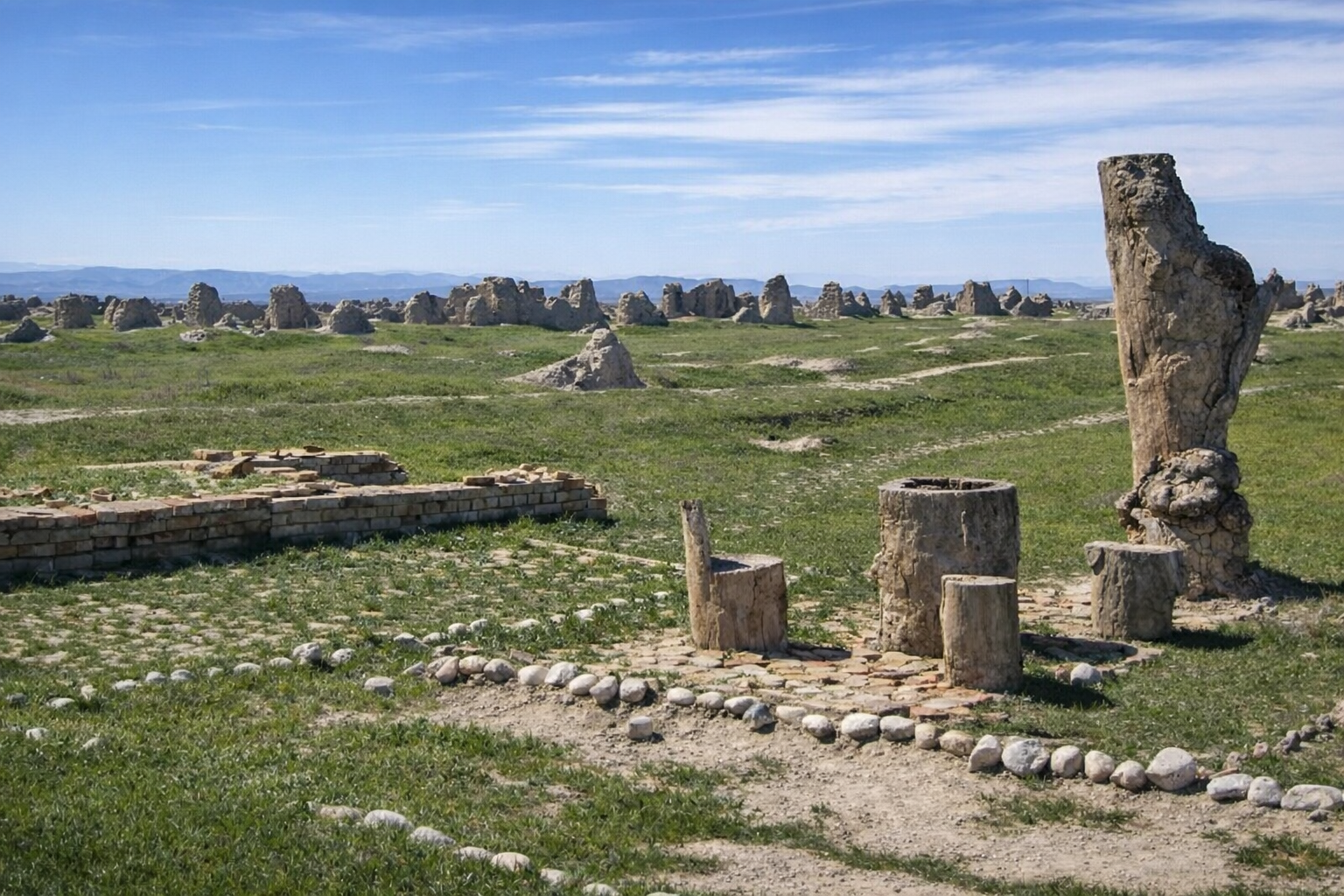
Between Ashgabat and Mary, near the modern town of Kaakhka in Turkmenistan's Ahal Province, lie the eroded mudbrick ruins of Abiverd — a city that spent over a thousand years standing guard on the edge of empires, long before it finally fell silent in the 19th century.
A Sassanian Frontier City
Abiverd's origins trace back to the Sassanian Empire, and archaeological evidence places a significant settlement here as early as the 7th century AD. Known across history under several names — Abiward, Abi-ward, Baverd, and locally as "Peshtak," meaning "portal," after its now-vanished city gates — the city sat in the northern reaches of Greater Khorasan. It functioned as part of a chain of fortified border cities built by the rulers of ancient Iran specifically to guard against raids from the nomadic steppe of Inner Asia, giving Abiverd a military purpose from its very founding.
A Crossroads of Trade
Abiverd's location wasn't just defensively useful — it was commercially valuable. The city sat directly on trade routes connecting Merv to Nisa and Khorezm to Persia, and its market drew both settled merchants and nomadic herders from the surrounding steppe looking to trade livestock goods for handicrafts. Excavations of its artisan quarters, concentrated in the southeastern and northwestern parts of the city, have uncovered metalwork, jewelry, and pottery fragments confirming Abiverd's role as a genuine craft and commercial hub of Northern Khorasan — not merely a garrison outpost.
Historical sources describe Abiverd in glowing terms: a city of "fertile lands and rich crops, famous for its magnificent market and mosque." The fortress itself was tightly designed with a single gate on its southwestern side, and nearby stood the Bandian Fire Temple, a Zoroastrian site reflecting the region's pre-Islamic religious heritage.
Conquest, Destruction, and Slow Decline
Abiverd's history was shaped as much by conflict as by commerce. During the rule of Caliph Osman in 652 AD, the city became a contested prize among rival Arab caliphates as the Islamic conquest reached Khorasan. It would face a far more devastating blow nearly six centuries later: in 1221, Tolui Khan, son of Genghis Khan, destroyed Abiverd in the same Mongol campaign that razed nearby Nisa. The 13th-century Persian historian Juwayni recorded the destruction of both cities in the same breath. Abiverd never recovered its former stature — a 14th-century visitor described it afterward simply as "a small town, like a big village."
The city limped on in diminished form for centuries afterward, until its last residents finally departed in 1876, relocating to what is now the town of Kaakhka nearby.
Rediscovering Abiverd Today
Abiverd is recognized today as one of Turkmenistan's eight historical and cultural reserves. Its central mound, or tell, still rises roughly 18 meters high with a circumference of about 213 meters — a visible remnant of the fortress that once stood there. Large-scale archaeological excavations resumed in 2017 under historian Akmurad Babayev and Turkmenistan's National Directorate for the Protection, Study and Restoration of Historical and Cultural Monuments, continuing to uncover new detail about a city that shaped — and was shaped by — over a thousand years of Khorasan's history.
For visitors, Abiverd remains an unpolished, largely unvisited site — no tourist infrastructure, just quiet ruins and the Kopet Dag foothills beyond, offering a genuinely raw encounter with Turkmenistan's deep past.