Ancient Merv: The Silk Road City That Ruled the World
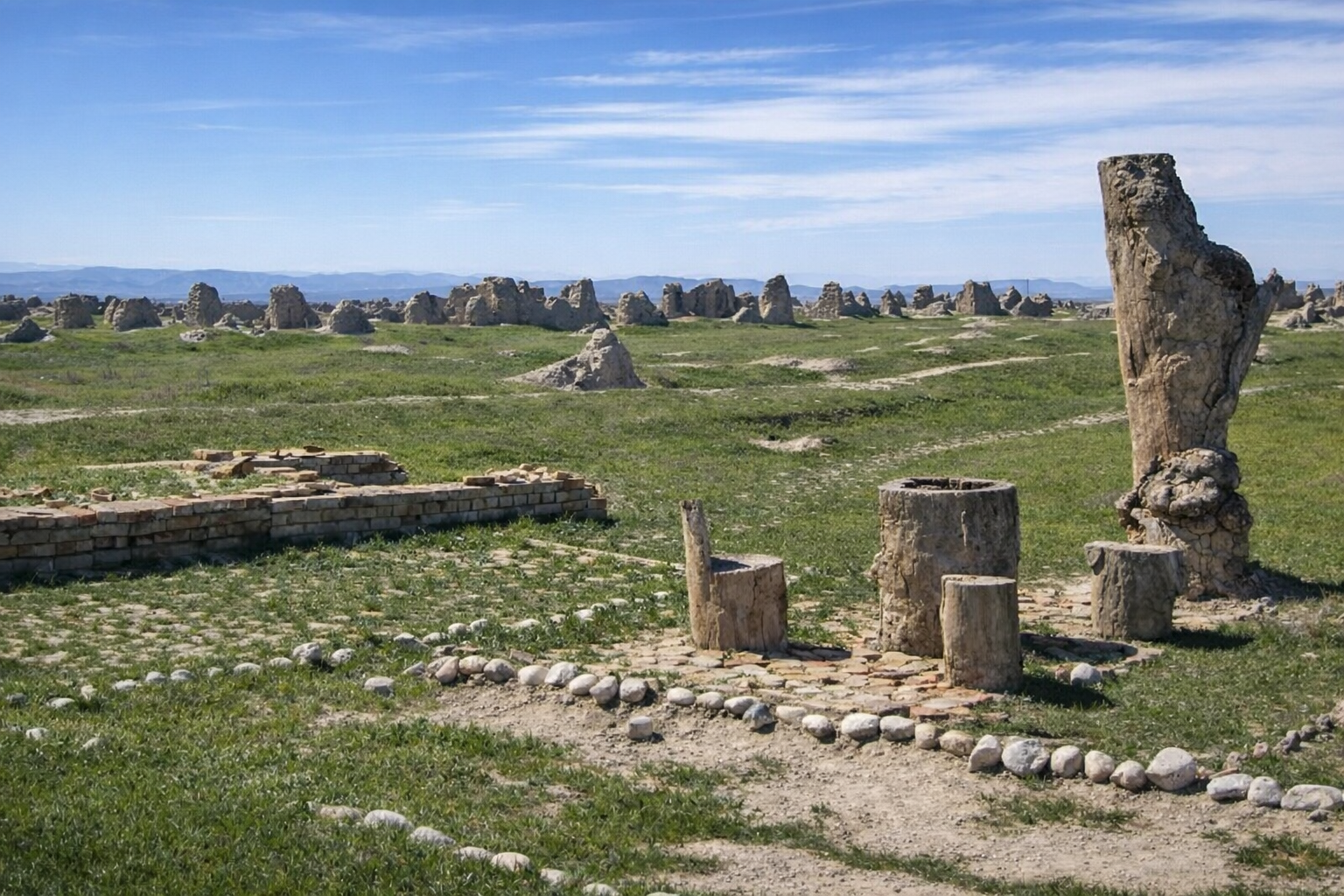
Along the Murghab River near the modern city of Mary lie the ruins of Ancient Merv — the oldest and most completely preserved of the oasis cities that once lined Central Asia's Silk Road. The remains span 4,000 years of human history, with successive cities built on the same ground as empires rose and fell, leaving behind one of the richest archaeological landscapes in the region.
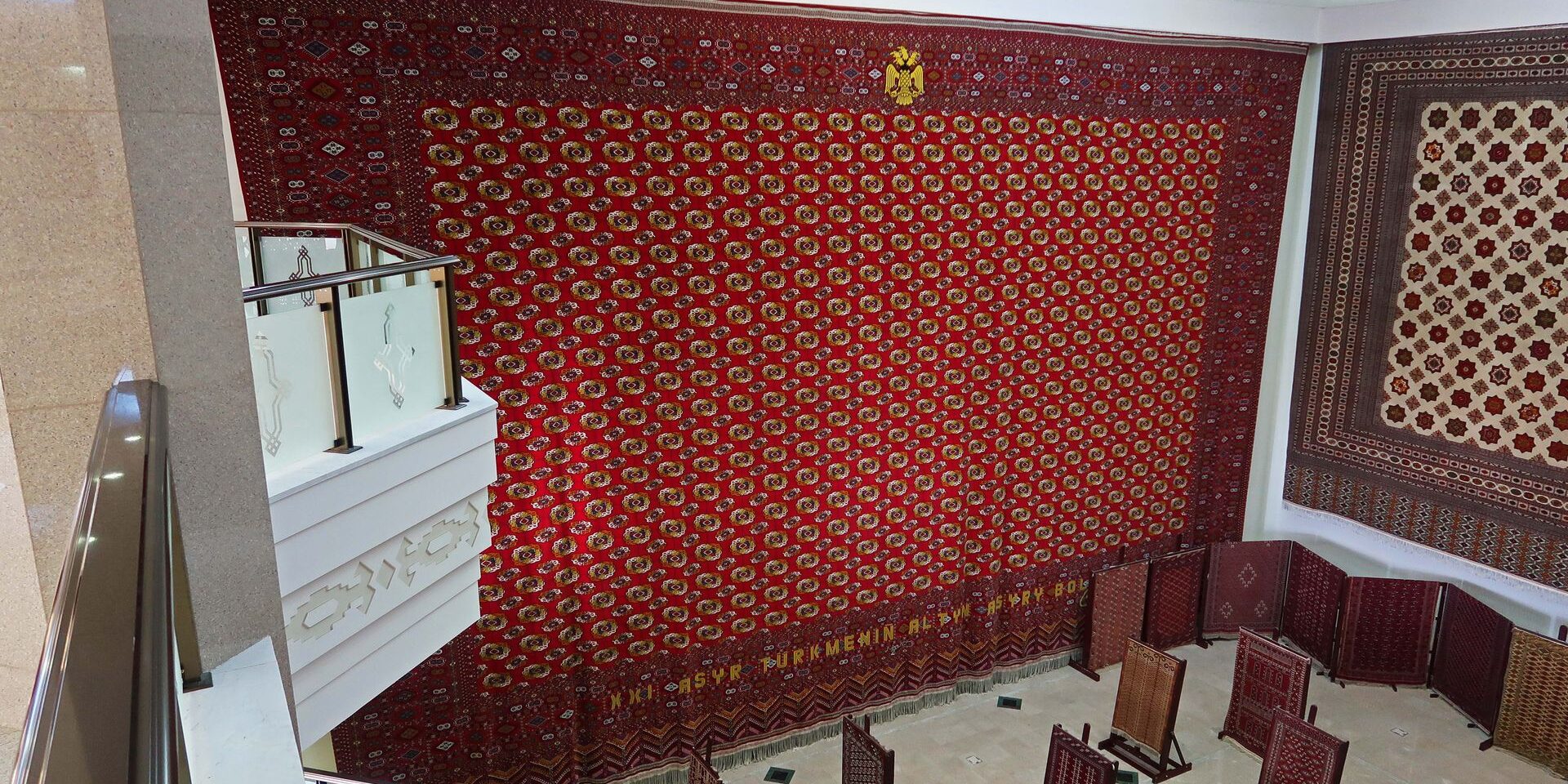
Merv's story begins under Persian rule as capital of ancient Margiana, but its golden age arrived centuries later. By its 11th- and 12th-century peak under the Seljuk Turks, Merv had become known as "Merv – Queen of the World," a center of commerce, religion, and culture that rivaled Damascus and Baghdad among the great cities of the Islamic world. Its workshops turned out wool, linen, cotton, and silk fabrics so prized that caravans carried them as far as the Maghreb, and its bazaars and libraries drew merchants and scholars from across Asia and the Mediterranean.
That prosperity came to a violent end in 1221, when Mongol forces led by Tolui Khan, son of Genghis Khan, laid siege to the city, destroying a metropolis that had stood for a thousand years. Merv never fully recovered, and it was ultimately abandoned in 1789.
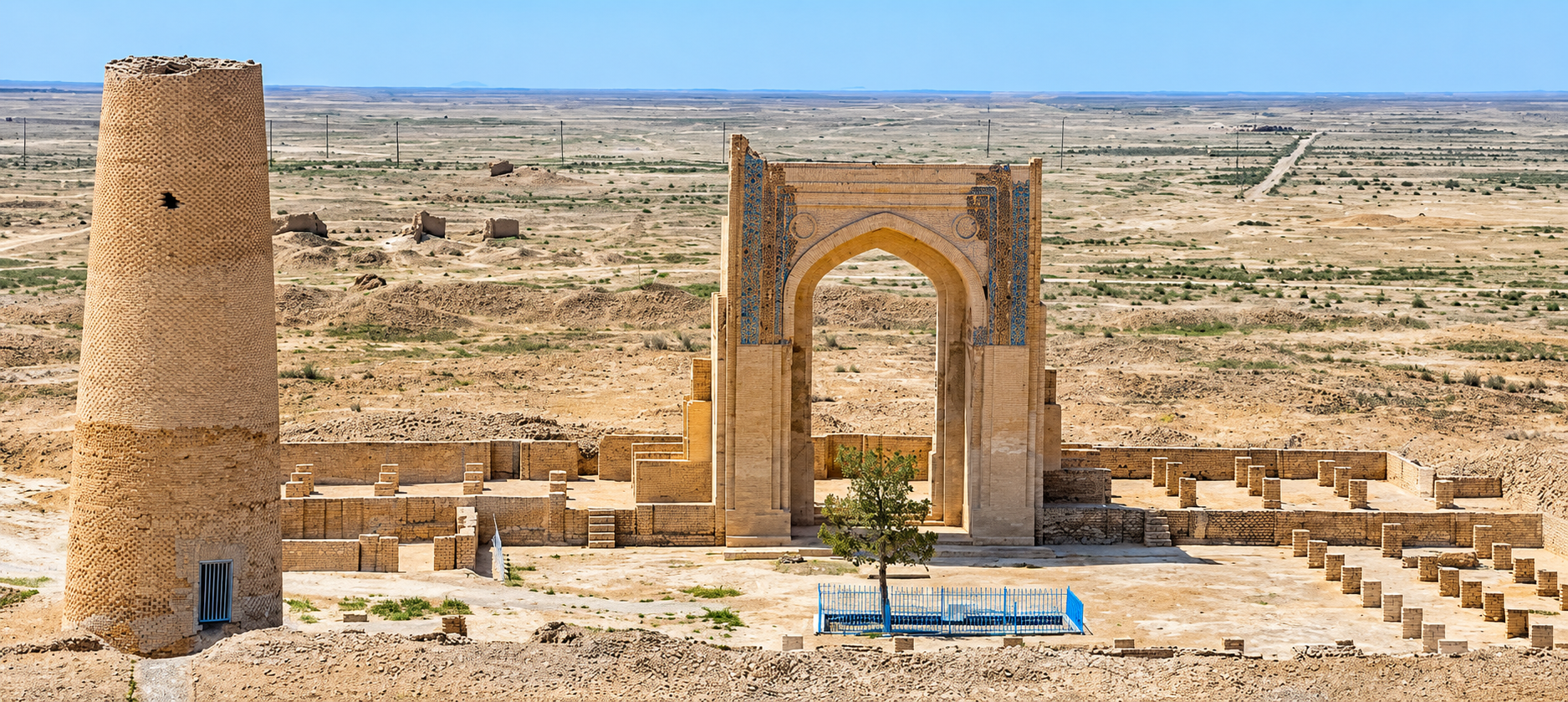
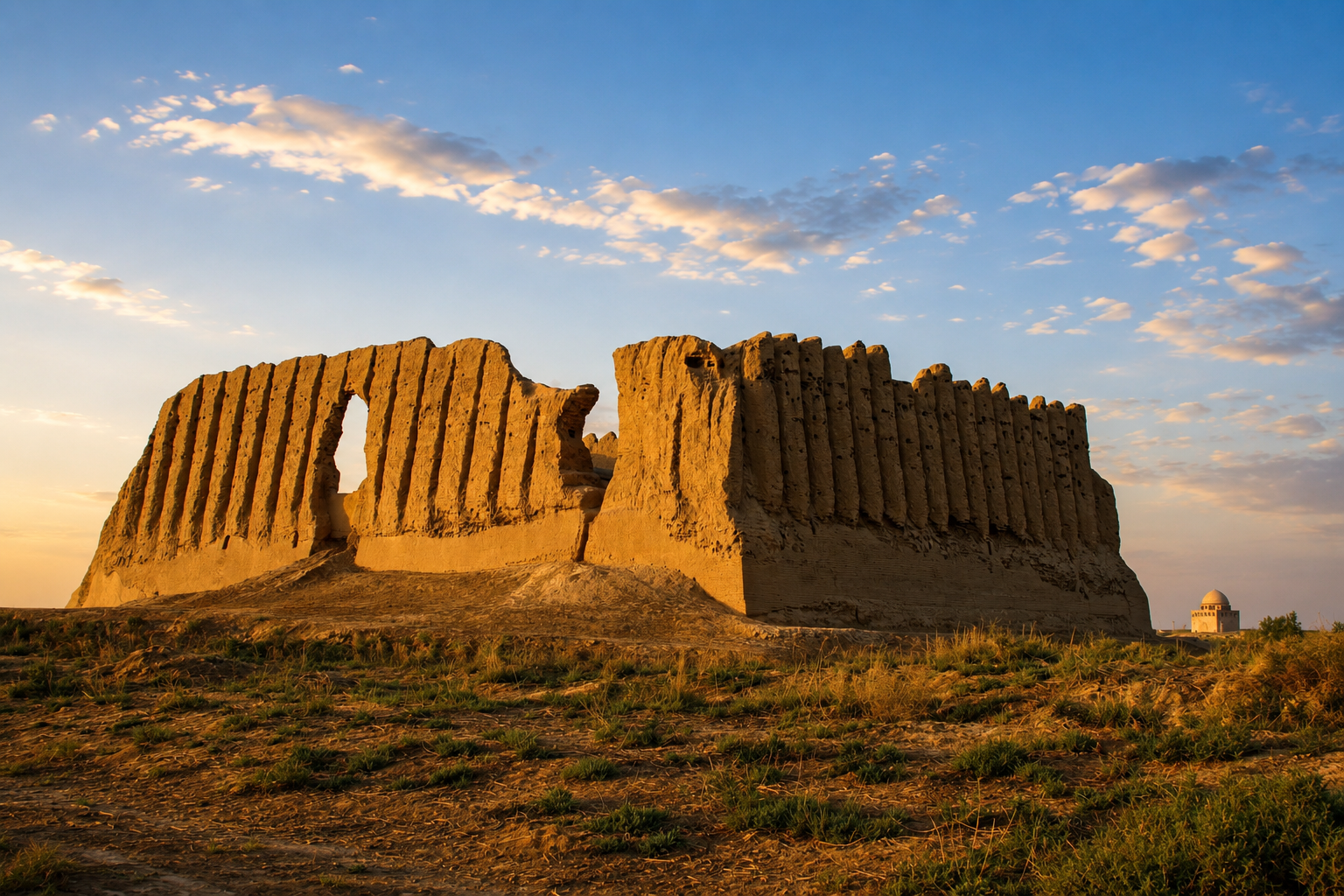
Today the site forms the State Historical and Cultural Park "Ancient Merv," its walled districts — including Erk Kala and Gyaur Kala — still traceable across the desert. Among the few structures to survive largely intact is the Mausoleum of Sultan Sanjar, standing at the heart of what was once Sultan Kala. In 1999, UNESCO inscribed Ancient Merv as a World Heritage Site, recognizing it as the oldest and best-preserved oasis city along the Silk Roads of Central Asia.