Konye-Urgench: Lost Capital of the Khorezm Empire
In Turkmenistan's far north, on the left bank of the Amu Darya, stand the monumental ruins of Konye-Urgench — once the capital of the Khorezm region and, in its medieval heyday, one of the great cities of the Islamic world. Urgench was the capital of Khorezm as far back as the Achaemenid period, though the monuments that survive today mostly date from its second, more famous golden age.
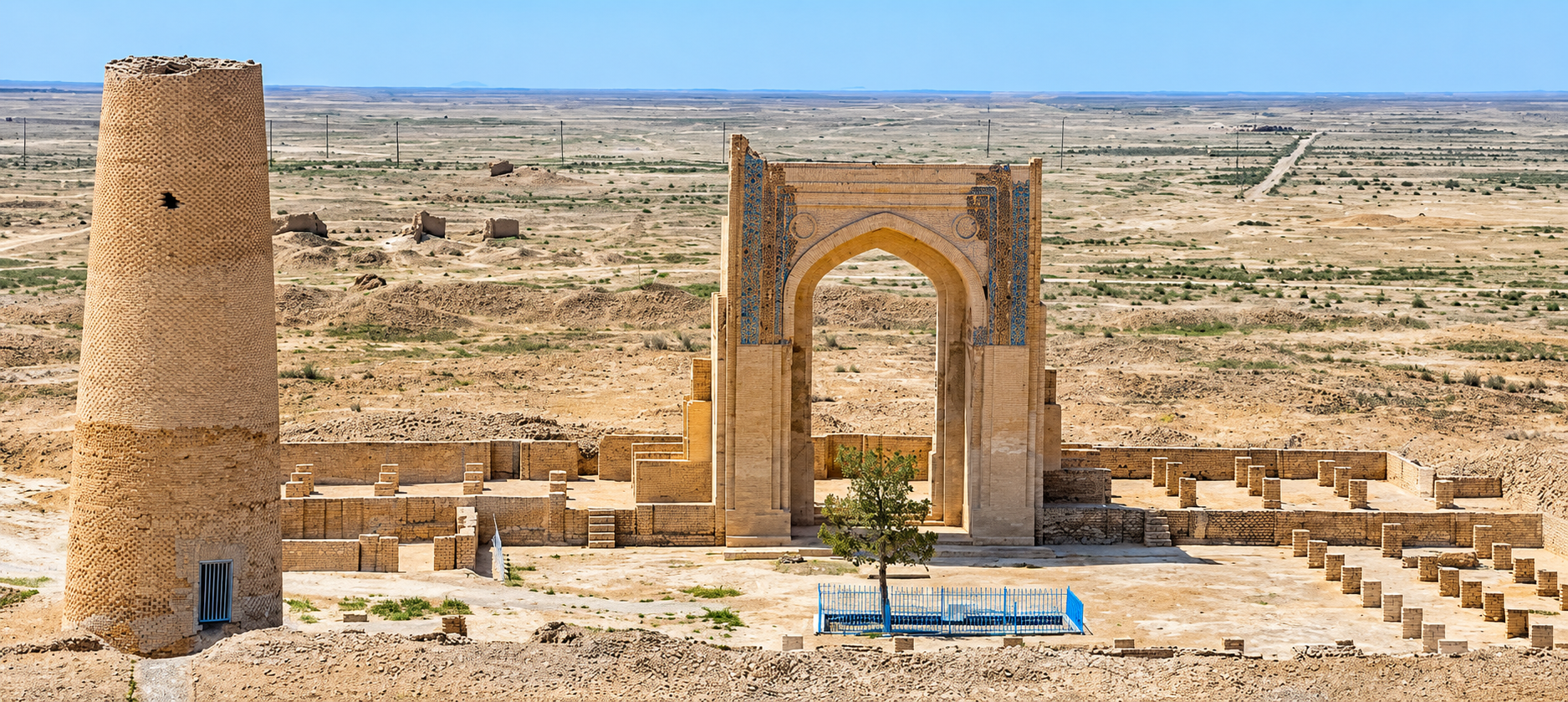
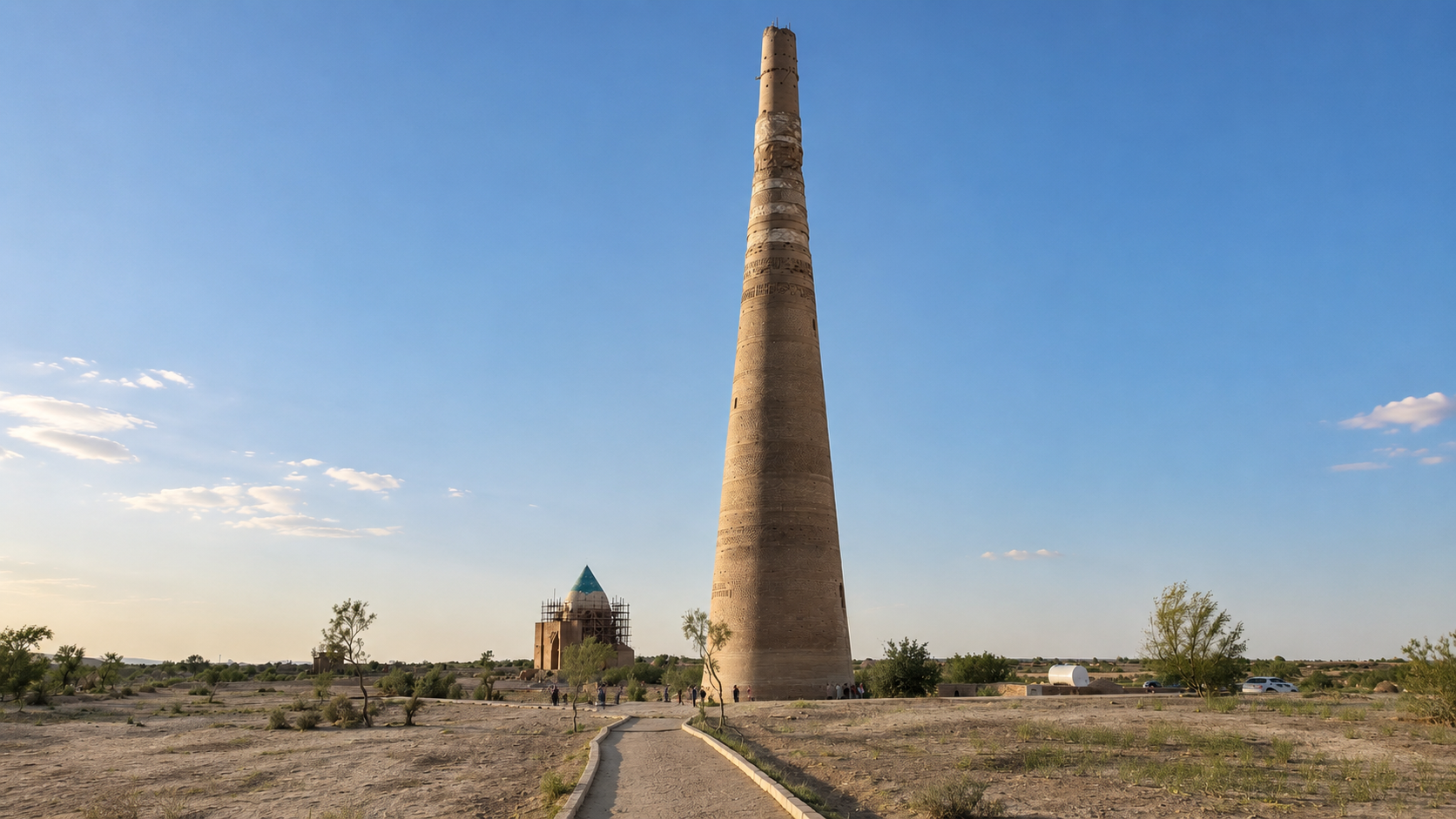
From the 10th to the 14th centuries, Urgench rivaled Bukhara, Samarkand, and even Baghdad as a center of trade, science, architecture, and religious scholarship under the Khorezmshah dynasty. Its defining monument, the Kutlug Timur Minaret, was begun in the 11th century and finished in the 14th under Kutlug Timur; at 60 meters, it remains the tallest minaret in Central Asia, its shaft wrapped in decorative bands and Kufic inscriptions. Close by stands the Mausoleum of Sultan Tekesh, shah of Khorezm in the 12th century, who extended his rule from the Aral Sea to the Persian Gulf and from Iran to the Pamirs — one of the few buildings here to predate the Mongol invasions.
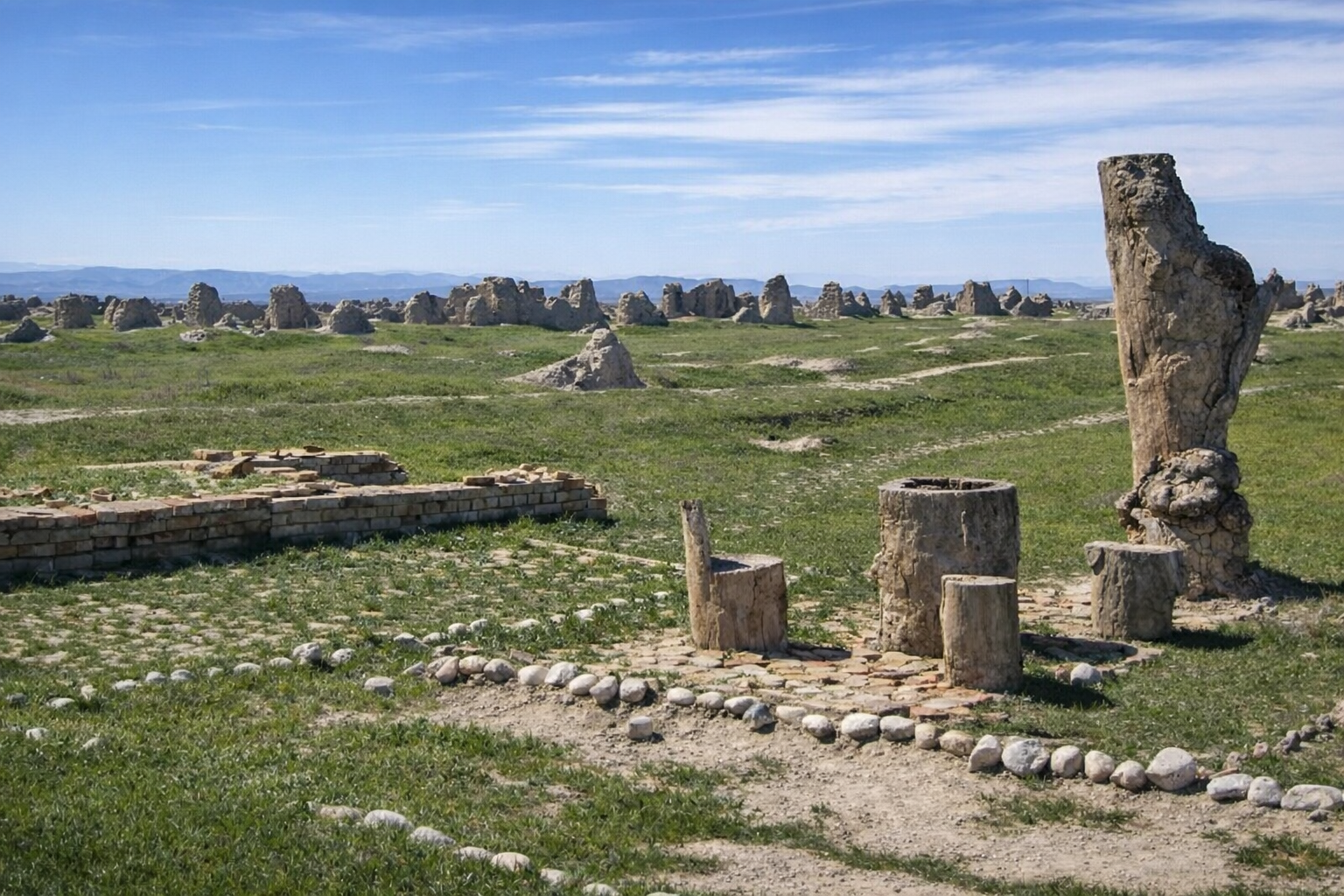
That invasion, in 1221, brought near-total destruction at the hands of Genghis Khan's army. The city was rebuilt but never regained its former stature, and it was eventually abandoned after the Amu Darya shifted course and cut off its water supply. Its name today reflects that decline: Konye-Urgench simply means "Old Urgench" in Persian.
In 2005, UNESCO inscribed Konye-Urgench as a World Heritage Site, protecting a series of 11th- to 16th-century monuments — a mosque, the gates of a caravanserai, fortresses, mausoleums, and the great minaret — that together form one of Central Asia's most striking open-air museums.