
Kazakhstan Border Crossings: Connections Across Central Asia
Kazakhstan’s land borders connect three Central Asian neighbours: Uzbekistan, Kyrgyzstan and Turkmenistan. These crossings make it possible to combine Almaty’s mountain scenery, the Silk Road heritage of southern Kazakhstan and the landscapes of Mangystau with a wider regional journey.
Kazakhstan has no direct land border with Tajikistan. Overland itineraries reaching Tajikistan continue through Uzbekistan or Kyrgyzstan.
This guide focuses on crossings relevant to international travellers and the practical differences between the main routes.
Information reviewed on 20 October 2026. Border availability, operating hours and vehicle restrictions should be reconfirmed before departure.
Kazakhstan–Uzbekistan Border Crossings
Southern Kazakhstan and Uzbekistan form a natural combination for cultural tours. Travellers can explore Turkistan and Shymkent before continuing to Tashkent, Samarkand and Bukhara.
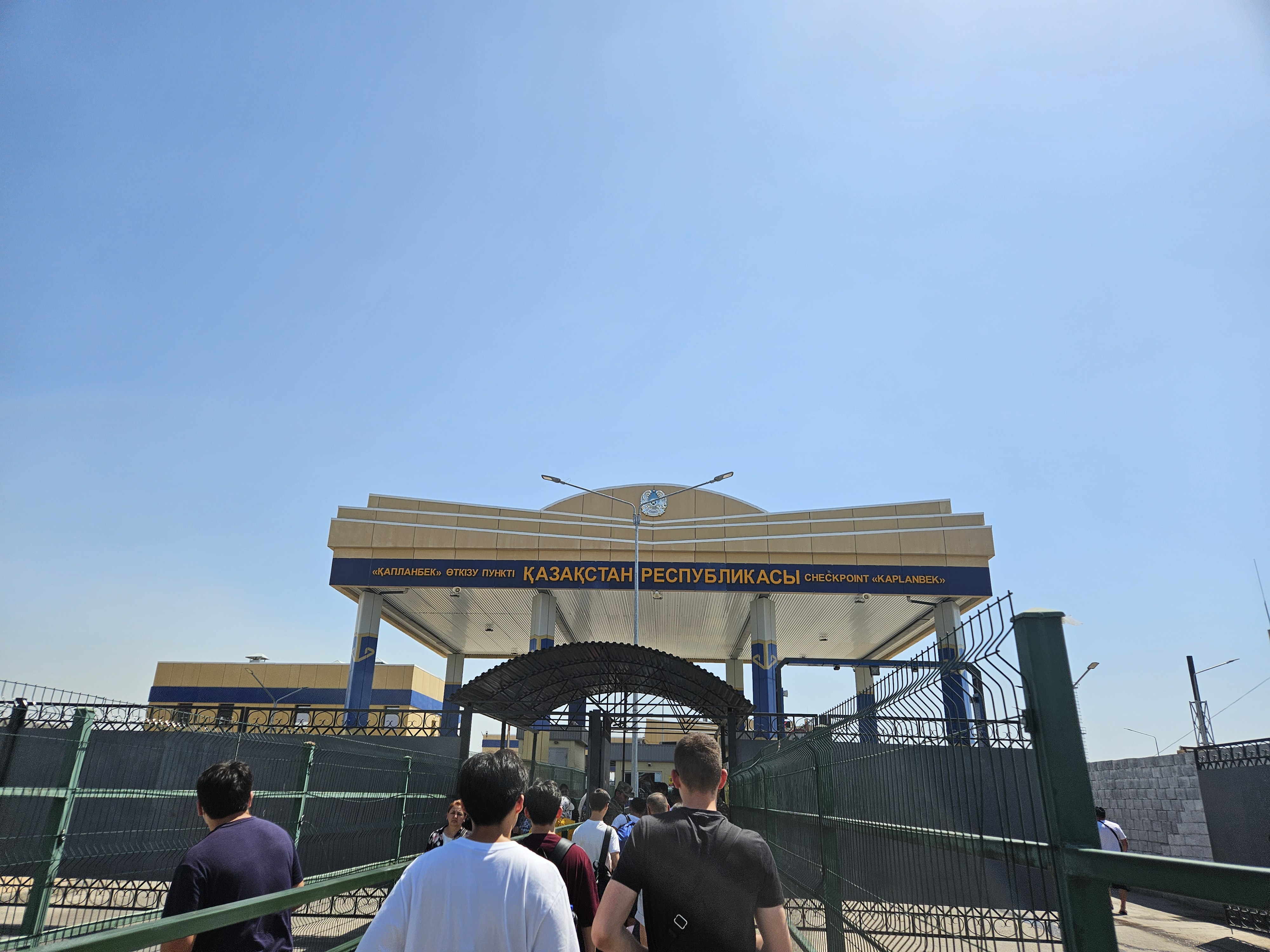
Kaplanbek–Zangiota: Shymkent and Tashkent
Kaplanbek on the Kazakh side connects with Zangiota in Uzbekistan, also known as the Navoi customs post.
This crossing serves journeys between Shymkent, Saryagash and Tashkent. Passenger and car traffic resumed following reconstruction, and it remains an important option while other crossings undergo work. Confirm arrangements for your particular vehicle or group transfer.
B. Konysbayev–Yallama: An Alternative Southern Route
B. Konysbayev, also written B. Konysbaev, connects with Yallama in Uzbekistan’s Tashkent region.
It provides another route between southern Kazakhstan and Tashkent. The checkpoint handles passenger transport as well as freight, making it relevant for private and group itineraries. Select the crossing according to your starting point, onward destination and current traffic conditions.
Zhibek Zholy–Gisht-Kuprik: Reconstruction Update
Zhibek Zholy–Gisht-Kuprik is a well-known gateway between the Tashkent and Shymkent areas.
However, a local border update dated 15 October 2026 continued to list it as closed for reconstruction. Travellers should obtain confirmation of actual passenger reopening before including it in a confirmed itinerary. Kaplanbek and Yallama are alternatives to consider.
Tazhen–Daut-Ata: Mangystau and Karakalpakstan
Tazhen–Daut-Ata links western Kazakhstan with Uzbekistan’s Karakalpakstan region.
At the review date, current local guidance listed the road crossing as closed to pedestrians, passenger cars and buses, with freight handled separately. A railway connection through Beyneu and Kungrad may provide an alternative on operating days, subject to tickets and entry eligibility.
Other International Crossings
Kazygurt–Tashkent and Atameken–Gulistan are also listed as international road crossings. Their suitability for a particular tour should be checked against passenger access, vehicle type and the planned route.
Kazakhstan–Kyrgyzstan Border Crossings
Kazakhstan and Kyrgyzstan combine particularly well for journeys featuring Almaty, Bishkek, Issyk-Kul and Karakol.
Korday–Ak-Jol: Almaty and Bishkek
Korday in Kazakhstan and Ak-Jol in Kyrgyzstan form the main crossing between Almaty and Bishkek.
This is a practical choice for itineraries continuing from Almaty to the Kyrgyz capital, Ala-Archa National Park and Issyk-Kul. Allow time for both countries’ border formalities and arrange a clear meeting point if changing vehicles.
Kegen–Karkyra: Southeastern Kazakhstan and Karakol
Kegen–Karkyra, also spelled Karkara, connects southeastern Kazakhstan with eastern Kyrgyzstan.
This route can suit itineraries combining the Charyn Canyon or Kolsai Lakes area with Karakol and eastern Issyk-Kul.
Operating hours require particular attention. Published announcements and reports have differed, including a September 2026 statement describing restricted hours. Confirm the schedule for your date, account for the one-hour time difference between the countries, and check road conditions before departure.
Aisha Bibi–Chon-Kapka: Taraz and Talas
Aisha Bibi connects Kazakhstan’s Taraz area with Chon-Kapka in Kyrgyzstan’s Talas region.
It is relevant for travellers exploring Talas and southern Kazakhstan.
Sypatay Batyr–Chaldybar: Merke and Western Chuy
Sypatay Batyr connects with Chaldybar in western Kyrgyzstan. This crossing serves the Merke–Kara-Balta direction and may suit routes approaching Bishkek from the west.
These two pairs are identified in Kazakhstan’s official checkpoint information. Confirm current passenger and vehicle arrangements before selecting either route.
Karasu–Ak-Tilek: Check Passenger Suitability
Karasu–Ak-Tilek is another border connection, strongly associated with commercial transport. Travellers should obtain specific confirmation of passenger and vehicle eligibility before choosing it for a tourist transfer.
Kazakhstan–Turkmenistan Border Crossing
Temir Baba–Garabogaz: Mangystau and Western Turkmenistan
Temir Baba in Kazakhstan connects with Garabogaz, also spelled Karabogaz, in Turkmenistan. It is the only road checkpoint between the two countries.
This connection is relevant for journeys combining Aktau and Mangystau with western Turkmenistan. An overland itinerary can continue through Garabogaz towards Turkmenbashi and onward destinations.
Both sides have received infrastructure upgrades: Kazakhstan opened its modernised Temir Baba facilities in December 2025, while Turkmenistan reported completion of the Garabogaz customs-post modernisation in May 2026.
Before leaving Aktau, confirm your Turkmenistan entry documents, crossing date and onward transfer arrangements. Travellers bringing a foreign-registered vehicle should obtain separate confirmation of vehicle admission and applicable restrictions.
Because this is a remote route, coordinate fuel stops, accommodation and border meeting arrangements in advance.
Connecting Kazakhstan with Tajikistan
Tajikistan can be included as a further stage of a Kazakhstan itinerary through Uzbekistan.
For example, travellers can continue from Shymkent to Tashkent and then towards Khujand through Oybek–Fotehobod. Another option follows Tashkent and Samarkand before entering Tajikistan through Jartepa–Sarazm for Panjakent and the Seven Lakes.
Each country requires its own entry eligibility, and transfers should be coordinated for every border involved.
Caspian Sea Connections
Caspian ferry journeys require separate arrangements from road crossings.
ASCO’s published passenger information describes connections between Alat in Azerbaijan and Kuryk in Kazakhstan, and between Alat and Turkmenbashi. These involve Azerbaijan as an additional country. A direct Kazakhstan–Turkmenistan passenger sailing has not been verified for this guide; obtain route-specific confirmation from the operator before including one in an itinerary.
Entry Requirements for Overland Travellers
Visa-free eligibility depends on nationality and passport type. Check Kazakhstan’s official visa information alongside the requirements of every neighbouring country on your route.
Kazakhstan’s eVisa is restricted to entry and exit through international airports under the official guidance reviewed. Travellers requiring a visa for a land journey should confirm the appropriate visa with a Kazakh embassy or consulate.
Kazakhstan is also introducing Electronic Travel Authorisation through QazETA in stages. Check the current requirements for your departure date; an ETA and an eVisa serve different purposes.
For self-drive journeys, check vehicle registration, insurance, owner authorisation where applicable, and temporary-import documentation. Hotels or hosts must also notify Kazakhstan’s migration authorities of a foreign visitor’s arrival within three working days.