Samarkand: 2,700 Years at the Crossroads of Civilizations
Few cities on Earth can claim an unbroken history stretching back nearly 2,700 years — and fewer still can back that claim with UNESCO's own words: Samarkand is recognized as a genuine "crossroad and melting pot of the world's cultures." Long before its turquoise domes made it one of the most photographed cities in Central Asia, Samarkand was already ancient.
Afrasiyab: The Sogdian Foundation
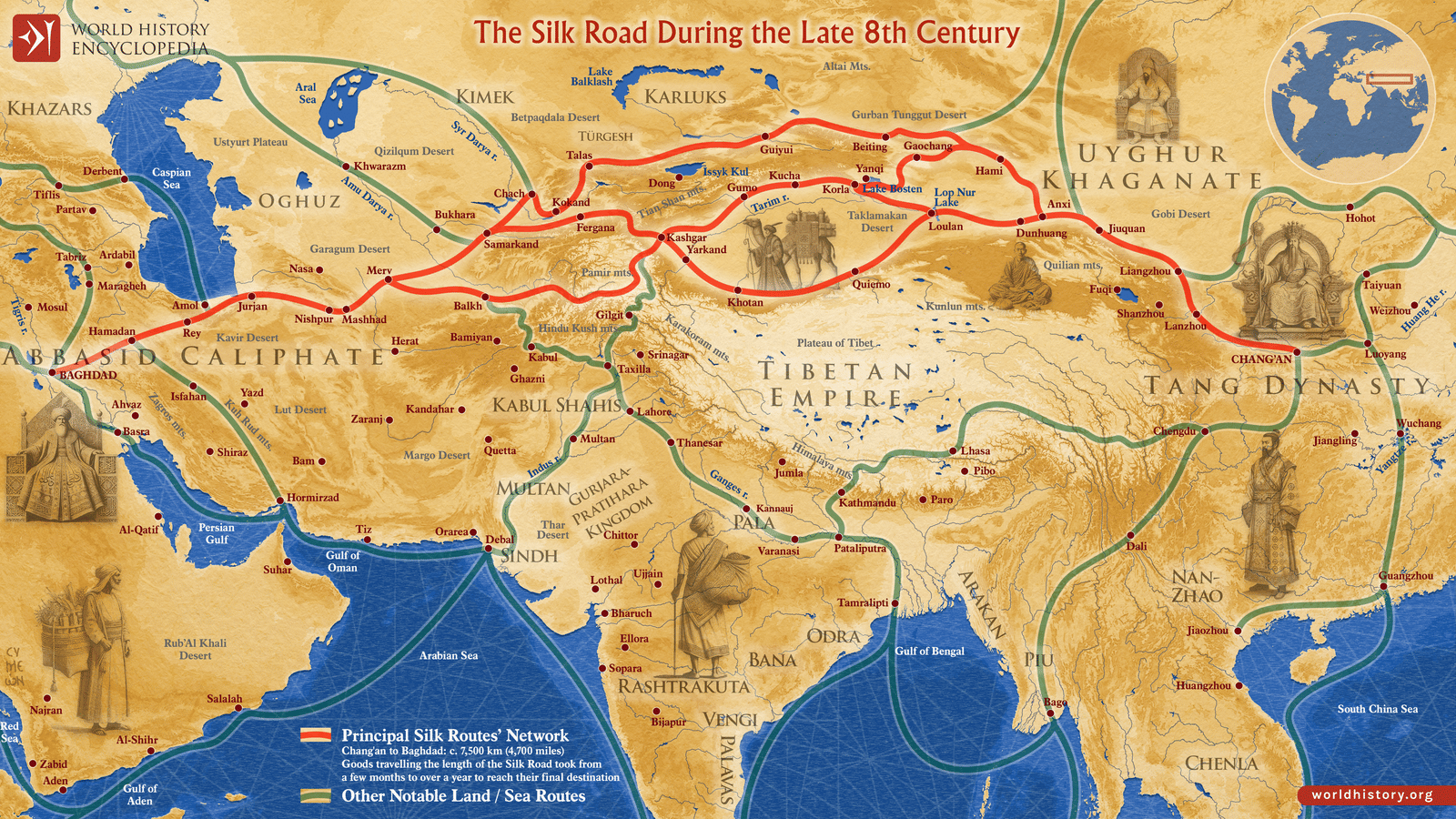
Samarkand was founded around the 7th century BCE under the name Afrasiab (also spelled Afrasiyab), making it one of the oldest continuously inhabited cities in Central Asia. It rose to prominence as the capital of Sogdiana, homeland of the Sogdians — the celebrated Silk Road merchants whose trading networks stretched from China to the Mediterranean. Murals recovered from the Afrasiyab site and now housed in Samarkand's Afrasiyab Museum depict foreign ambassadors from China, Korea, and Persia arriving at the Sogdian court, testament to the city's status as a genuine diplomatic and commercial hub centuries before the Silk Road's name existed.
In 329 BCE, Alexander the Great captured the city — then known by its Greek name, Maracanda — during his eastern campaigns, reportedly remarking that it was even more beautiful than he had imagined. It was in this region that he married Roxana, a Bactrian noblewoman, tying Samarkand permanently into the story of the Hellenistic world.
Islam, Paper, and the Mongol Catastrophe
Arab forces took Samarkand in 712 CE, bringing Islam to the region — a turning point that would reshape the city's culture for the next thirteen centuries. A less obvious but arguably more consequential moment followed roughly forty years later: after the Battle of Talas in 751 CE, Chinese papermaking technology reportedly reached the city, and Samarkand became the first major center of paper production outside China itself — from where the technology eventually traveled on to Baghdad and, ultimately, medieval Europe.
That long history of prosperity was violently interrupted in 1220, when Genghis Khan's Mongol army besieged and destroyed the city. Irrigation channels were wrecked, much of the population was massacred or deported, and ancient Afrasiyab was abandoned permanently — its ruins remain an open archaeological field today. Samarkand itself would rise again, but on a new site just to the south.
Timur's Golden Age
Everything most visitors associate with Samarkand today dates from what followed the Mongol destruction. In the late 14th century, Timur (Tamerlane) made the rebuilt Samarkand the capital of his new Timurid Empire, transforming it into the ceremonial and scholarly heart of a realm stretching from India to the Caucasus. Timur died in 1405 while preparing a military campaign against China, but his legacy of monumental architecture — fusing Turkic and Persian artistic traditions — continued under his successors.
Chief among them was his grandson, Ulugh Beg, who built the core of what is now Samarkand's most iconic landmark: the Registan. Its three monumental madrasas — the Ulugh Beg Madrasa (completed 1420), the Sher-Dor Madrasa (completed 1636), and the Tilya-Kori Madrasa (completed 1660) — form an ensemble unique in Islamic urban planning, unmatched anywhere else in the Islamic world for its ambition and cohesion. Ulugh Beg, more scholar than conqueror, also built his famed astronomical observatory nearby around 1428, turning Samarkand into a genuine center of scientific learning alongside its role as dynastic capital.
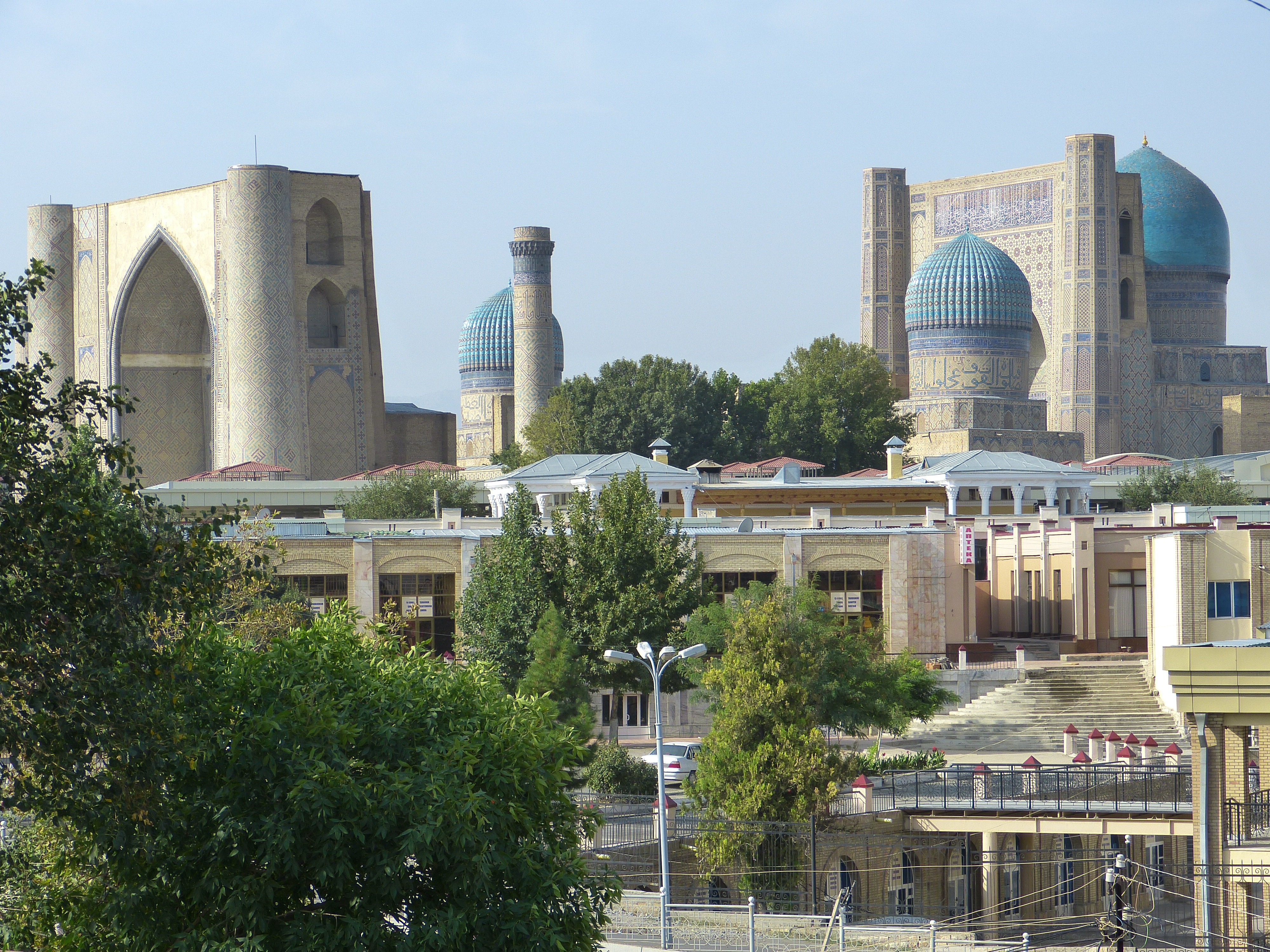
Other Timurid-era monuments still standing today include the Bibi-Khanum Mosque, the Shah-i-Zinda necropolis — a striking avenue of tiled mausoleums — and the Gur-e-Amir, Timur's own resting place.
A Legacy UNESCO Now Protects
In 2001, UNESCO inscribed the historic town of Samarkand as a World Heritage Site under the name "Samarkand – Crossroads of Cultures," recognizing over two and a half millennia of continuous history across an inscribed area of 1,123 hectares. For today's visitor, walking from the Registan to the ruins of Afrasiyab means walking through nearly every major chapter of Central Asian history in a single afternoon — Sogdian trade, Hellenistic conquest, Islamic scholarship, Mongol devastation, and Timurid glory, all layered into one living city.