Dehistan: The Forgotten Oasis City on Turkmenistan's Caspian Frontier
In the arid Balkan region of western Turkmenistan, not far from the modern port city of Turkmenbashi, the sun-baked plains hide one of the country's most remote and least-visited ancient sites: Dehistan, also known by its medieval name, Mashhad-i Misrian. Unlike Nisa or Merv, Dehistan has never drawn crowds — and that relative obscurity is precisely what makes it worth knowing.
A Very Old Oasis
Dehistan's story stretches back far further than its famous medieval ruins suggest. Irrigated agriculture in this oasis is believed to date back to around 2000 BCE, and the wider Dehistan region was part of Greater Khwarezm in the 1st millennium BCE before falling under Achaemenid Persian rule. The area survived the campaigns of Alexander the Great and continued to flourish through the Parthian era — meaning this land was already ancient by the time its best-known city was even built.
Misrian: A Medieval Powerhouse
The city most people mean when they say "Dehistan" — Misrian — took shape within this oasis around the 8th–9th centuries CE, growing into a significant craft and trading center under the Tahirid and Samanid dynasties. According to UNESCO's own record of the site, Dehistan/Mishrian became the principal city of Western Turkmenistan from the 10th to the 14th centuries, sitting on a major caravan route linking Gurgan in northern Iran to Khorezm. Its finest buildings date to the reign of the Khorezmshahs, whose patronage brought the city to its architectural peak.
The city was seriously fortified — a double row of defensive walls enclosed roughly 200 hectares, organized into a shakhristan (fortified citadel) and a rabat (the surrounding populated suburb). Local tradition also credits the region with a literary connection: it's said that the celebrated Persian poet Ferdowsi composed portions of his epic Shahnameh here, though this claim rests on regional tradition rather than documented record.
What Still Stands
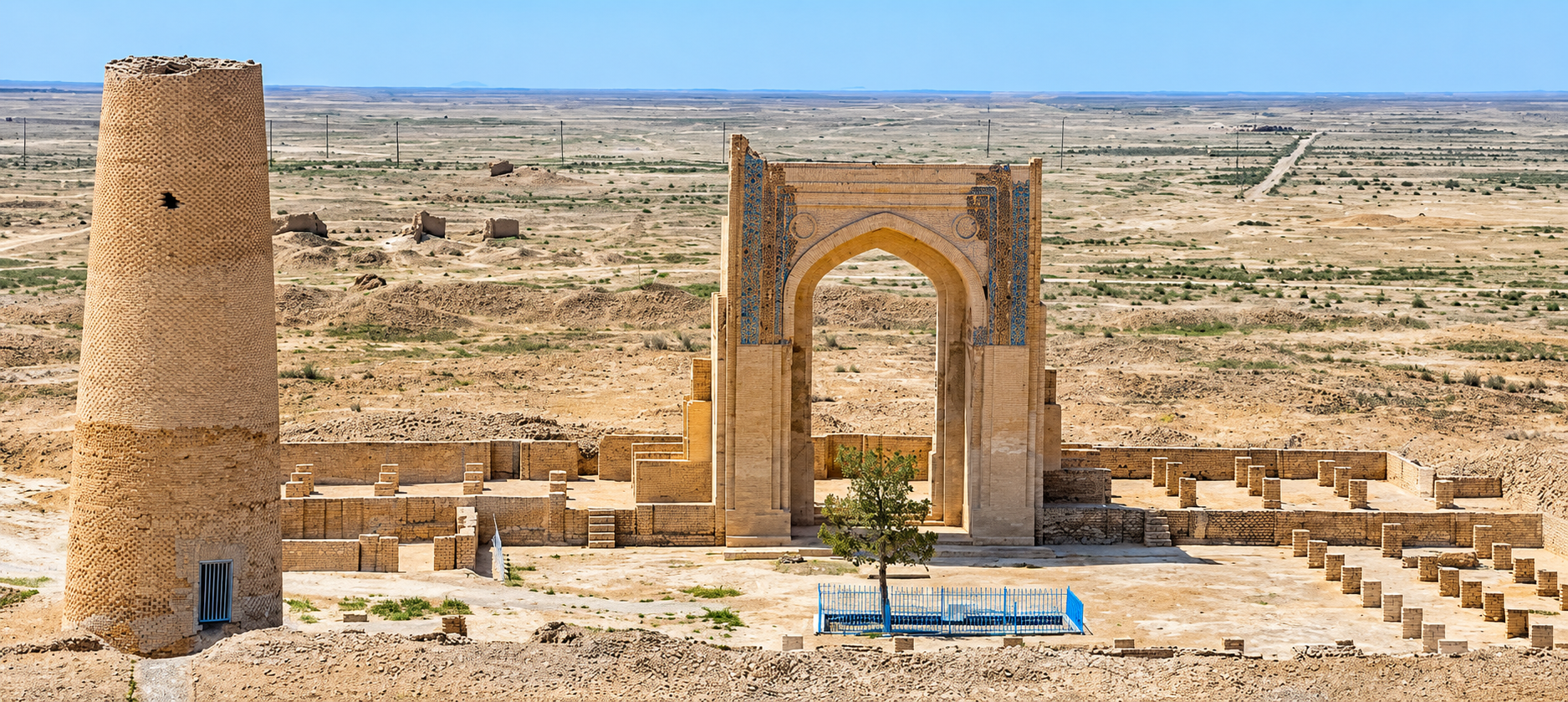
Remarkably, parts of Dehistan's finest architecture survive. A minaret built by Abu Bini Ziyad in 1004–05 CE still stands in fragments, alongside another built roughly two centuries later that once formed part of the Mosque of Muhammad Khorezmshah — its portal, 18 meters high and decorated with brickwork and turquoise glaze in floral and geometric patterns, remains one of the site's most striking surviving elements. Seven kilometers to the north lies the Meshat necropolis, where 19th-century travelers recorded around 20 surviving mausolea; five remain today, including the celebrated Shir-Kabir mosque-mausoleum, its mihrab intricately carved in colored stucco.
Decline and Recognition
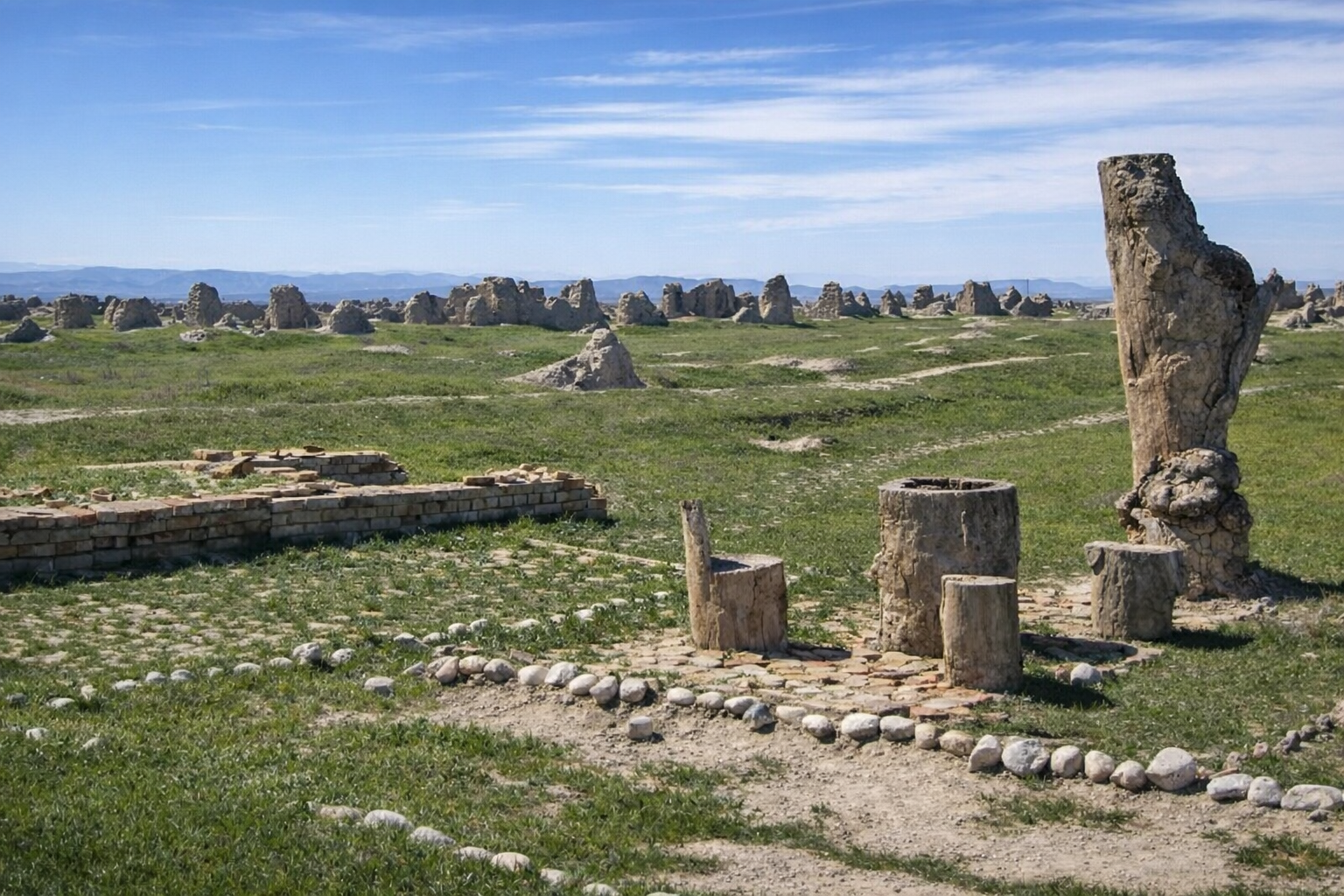
Like so many of Central Asia's oasis cities, Dehistan's fortunes were tied to water. The city was gradually abandoned during the 15th century as its water supply failed and regional trade patterns shifted. Today it sits as a quiet clay plain near the Caspian Sea — no crowds, no visitor infrastructure, just wind-worn brick and the outline of walls that once enclosed a genuine medieval capital.
Dehistan has been on UNESCO's Tentative List for World Heritage status since 1998, recognized for its potential outstanding value but not yet formally inscribed — placing it, like Gonur-Depe, among Turkmenistan's most significant "waiting" sites rather than its confirmed World Heritage destinations.