Khiva: The Walled Desert City at the Edge of Persia
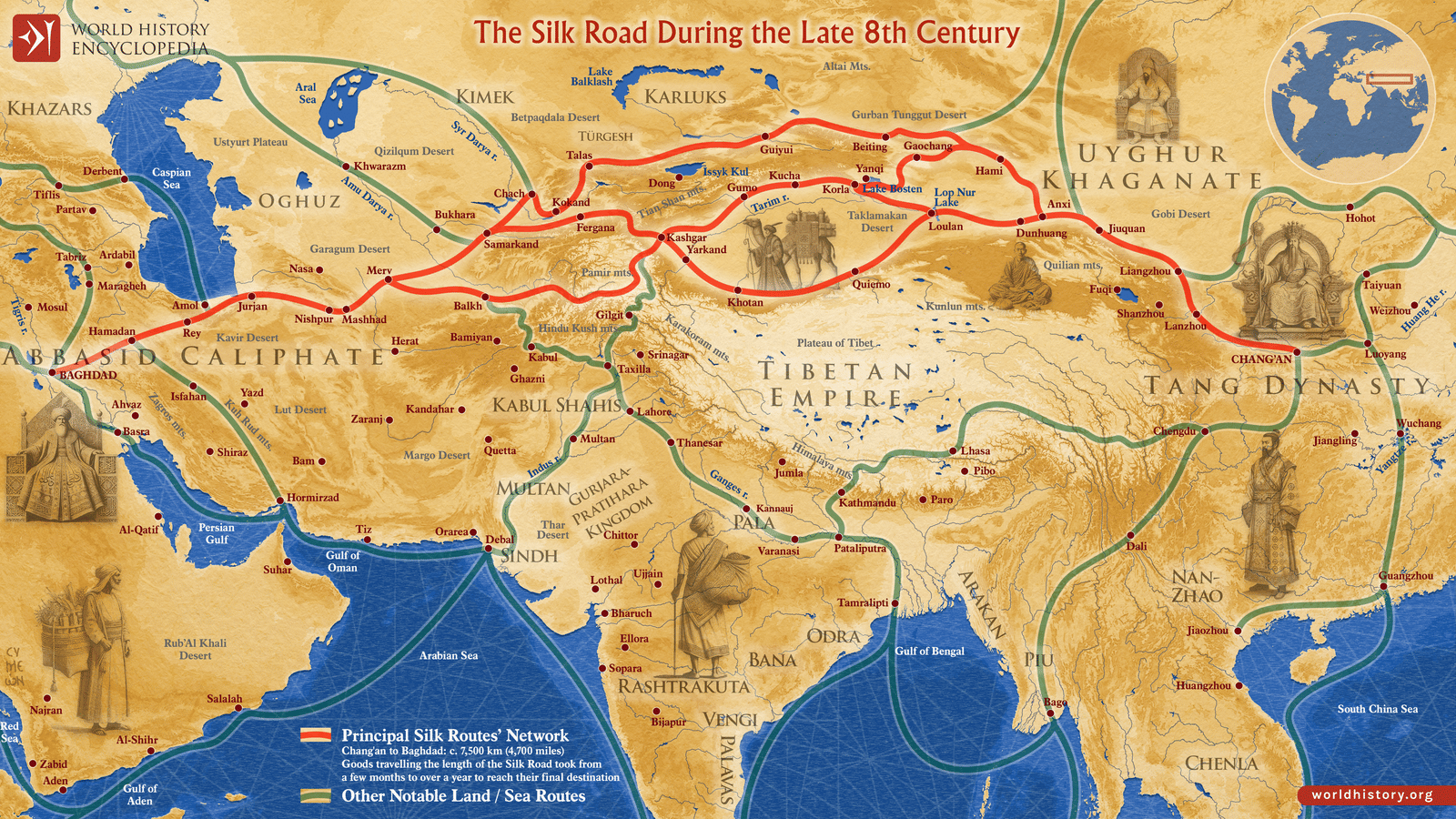
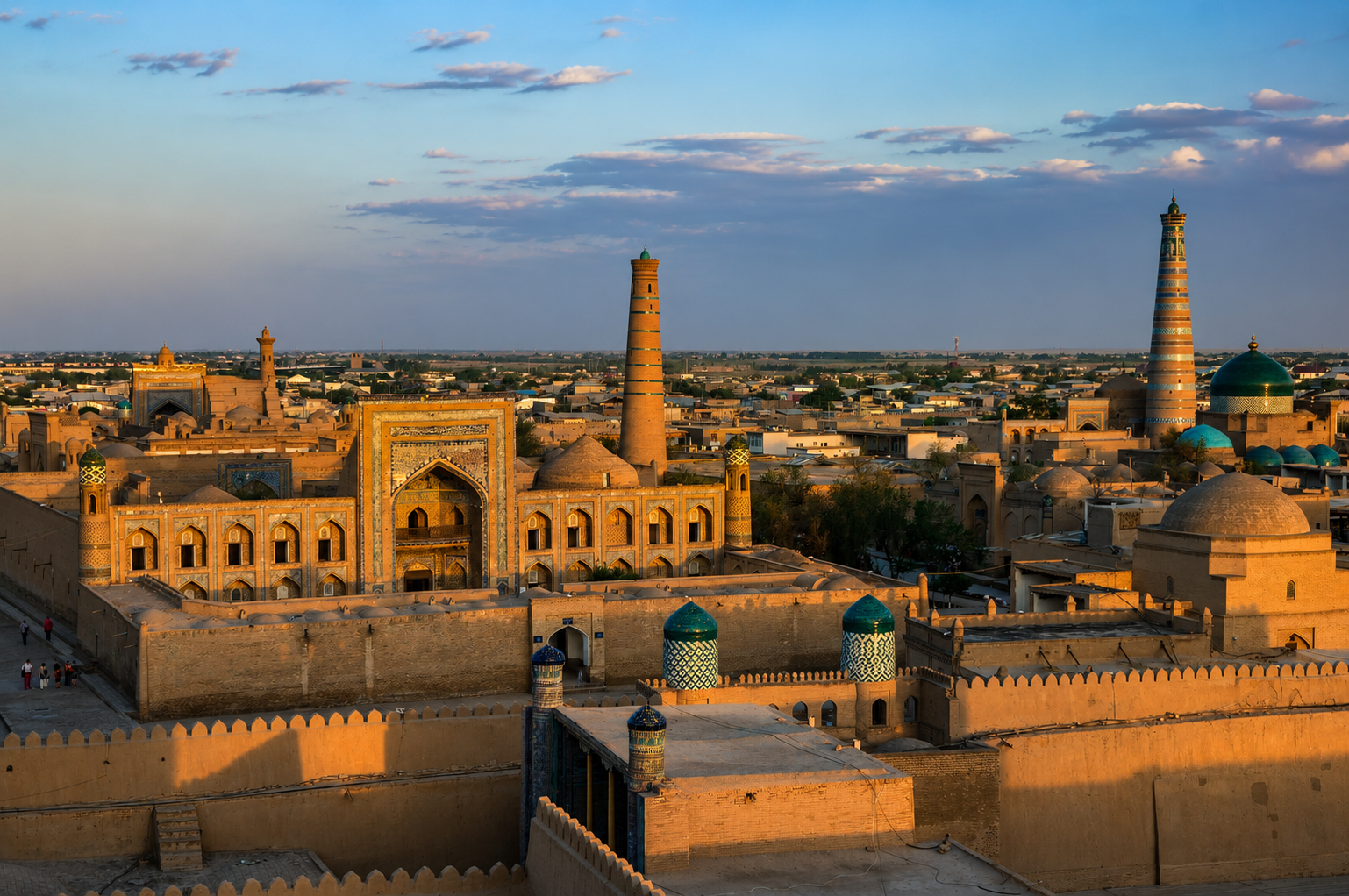
Few cities in Central Asia deliver the sense of stepping directly into the past quite like Khiva. Its inner walled town, Itchan Kala, remains one of the most intact examples of Islamic architecture anywhere in the region — a fortified rectangle of mosques, minarets, and palaces that served for centuries as the last stop for caravans before they vanished into the desert toward Persia.
Ancient Origins, Late Fame
Archaeological evidence places Khiva's founding around the 6th century BCE, giving the city roughly 2,500 years of history — a milestone it celebrated with an international UNESCO-backed anniversary in 1997, alongside Bukhara's own 2,500th celebration. It's worth noting that historians themselves have pointed out these round anniversary dates were more symbolic than strictly evidence-based, though the attention did genuinely help fund restoration of the city's monuments. Despite its ancient roots, Khiva doesn't appear in written historical sources until the 10th century, when two Arab travelers first recorded it.
Capital of a Khanate, Center of a Slave Trade
Khiva's political importance came relatively late. It became the capital of the Khanate of Khiva in the 16th century, and later served as capital of the broader Khwarezmia region and, briefly, the Soviet-era Khorezm People's Soviet Republic. Much of what stands within Itchan Kala's walls today dates from this khanate period, especially the 18th and 19th centuries.
That era carries a darker chapter as well: from the 17th to the 19th century, Khiva was the center of a significant slave market. During just the first half of the 19th century, roughly one million Persians — along with an unknown number of Russians — were enslaved and brought through the city before being sold, with many put to work constructing the very walls and buildings that make up Itchan Kala today. It's a part of Khiva's history worth acknowledging alongside its architectural beauty.
A Walled City Frozen in Time
Itchan Kala itself is laid out as a regular rectangle roughly 650 by 400 meters, enclosed by brick fortification walls up to 10 meters high, following building traditions dating back to ancient Central Asian town planning. Within its walls stand 51 significant monumental structures and around 250 traditional dwellings, according to UNESCO's own record of the site.
Among the standout landmarks: the Djuma (Friday) Mosque, first established in the 10th century and rebuilt in 1788–89, whose hypostyle prayer hall is supported by dozens of intricately carved wooden columns, some salvaged from far older structures. The Kalta Minor Minaret remains one of Khiva's most photographed — and most unusual — monuments precisely because it was never finished: construction began in 1852 under Muhammad Amin Khan, who intended it to be the tallest minaret in Central Asia, but he was killed in battle in 1855 before it could be completed, leaving behind its distinctive squat, turquoise-tiled form. The Islam Khodja Minaret, built in 1908–1910, later became Khiva's tallest structure at around 45 meters and is considered the last major architectural achievement of Central Asia's Islamic era.
The Tash Khauli Palace ("Stone Palace"), built between 1830 and 1838 for Khan Allah Kuli, contains more than 260 rooms across three courtyards, its walls covered in the distinctive blue-and-white majolica tilework associated with Khiva. Notably, the great 11th-century polymath Al-Biruni — subject of an earlier piece on this site — is believed to have been born in Khiva or in the nearby city of Kath, tying the city directly into the same intellectual legacy that shaped medieval science.
Central Asia's First UNESCO Site
In 1990, Itchan Kala became the very first site in Uzbekistan — and in all of Central Asia — to be inscribed on the UNESCO World Heritage List, a distinction that predates even Bukhara's 1993 inscription and Samarkand's in 2001. For today's traveler, that first-mover status shows: Itchan Kala remains remarkably whole, a walled museum-city where it's still possible to walk the same streets that once marked the final threshold between the Silk Road and the desert beyond.