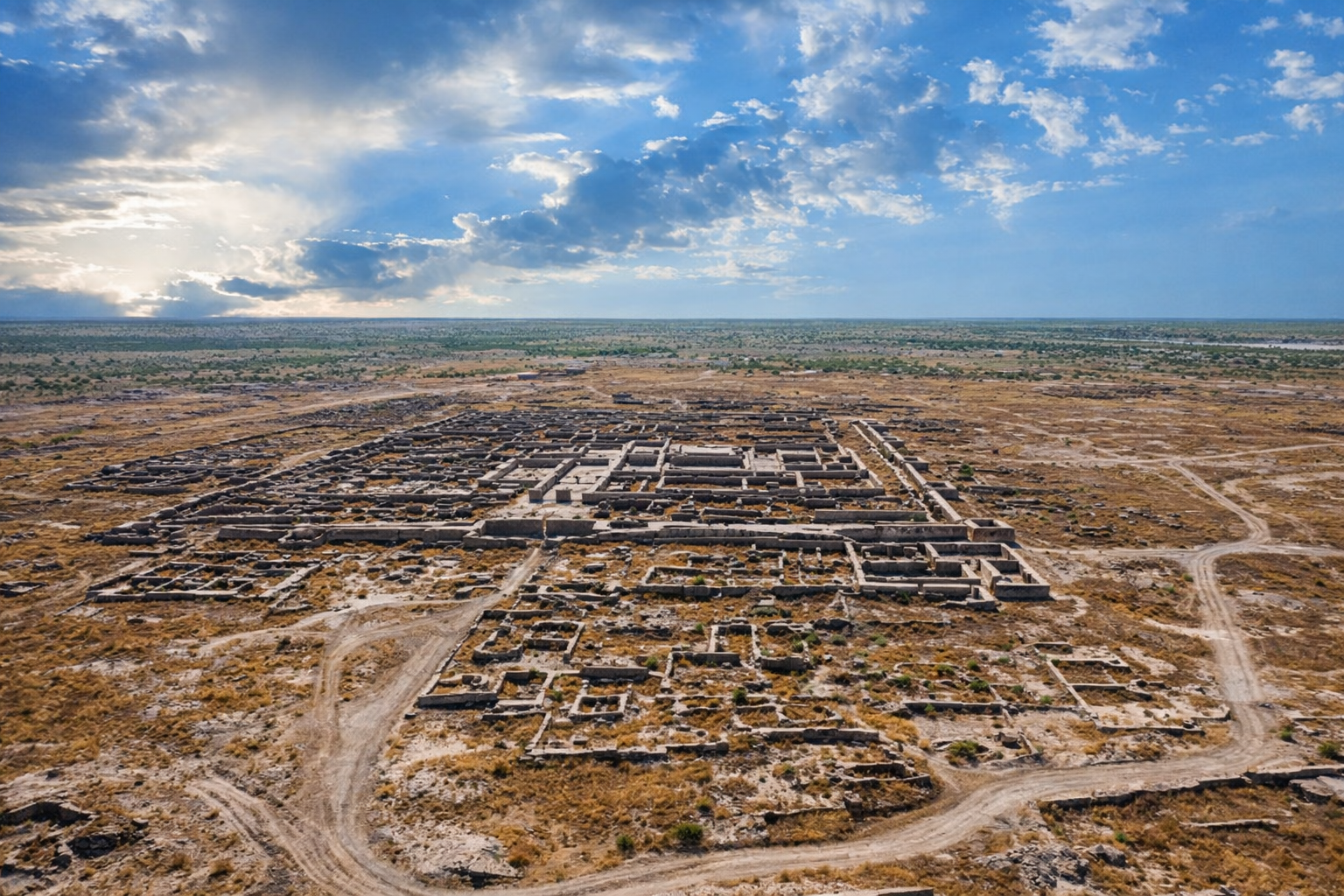
Gonur-Depe: The Bronze Age Capital of a Forgotten Civilization
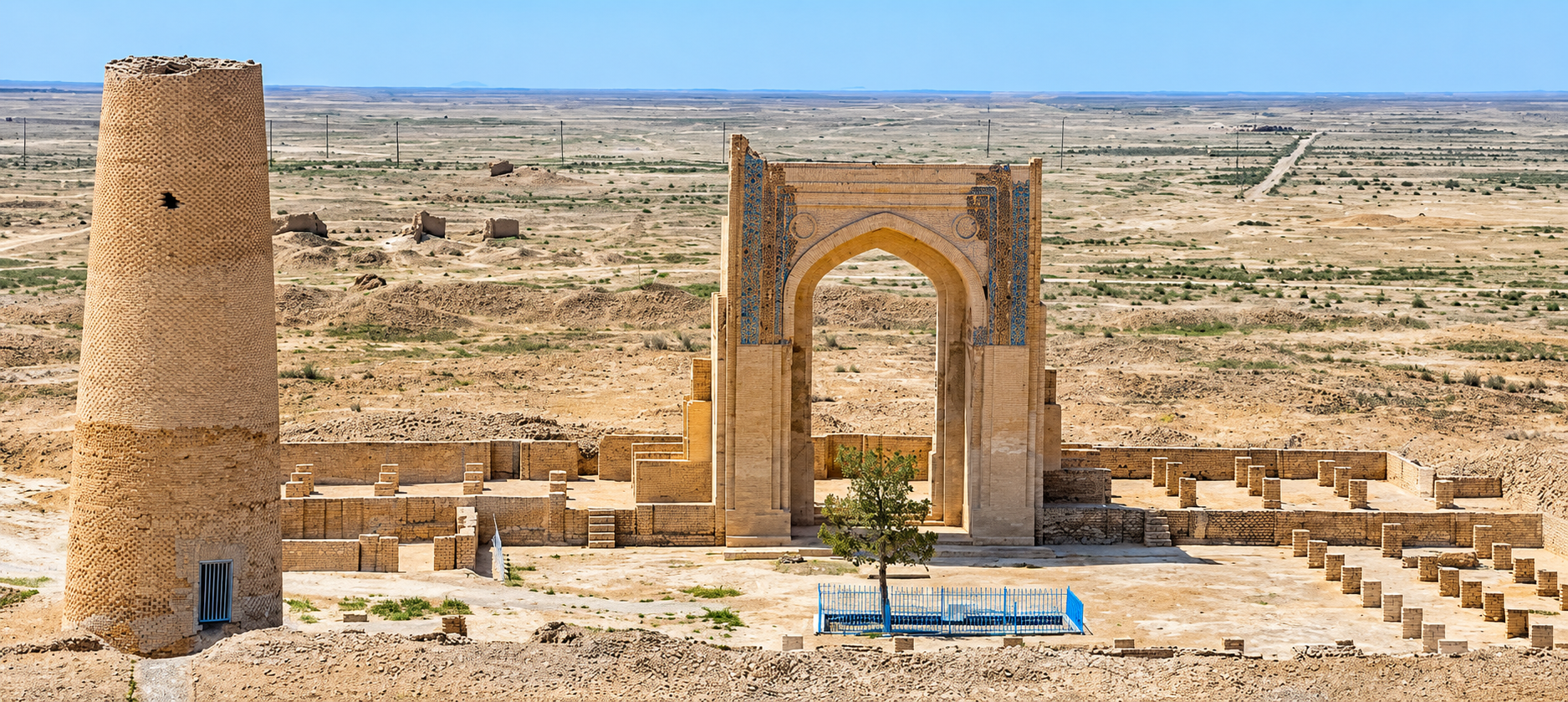
Roughly 60 kilometers north of Mary, buried in the sands of the Karakum Desert, lie the ruins of Gonur-Depe — one of the most significant Bronze Age sites in Central Asia, and the ancient capital of the long-lost land of Margiana. Where Nisa and Merv speak to empires of the classical and medieval world, Gonur-Depe reaches back further still: this city was already a thousand years old before Merv was even founded.
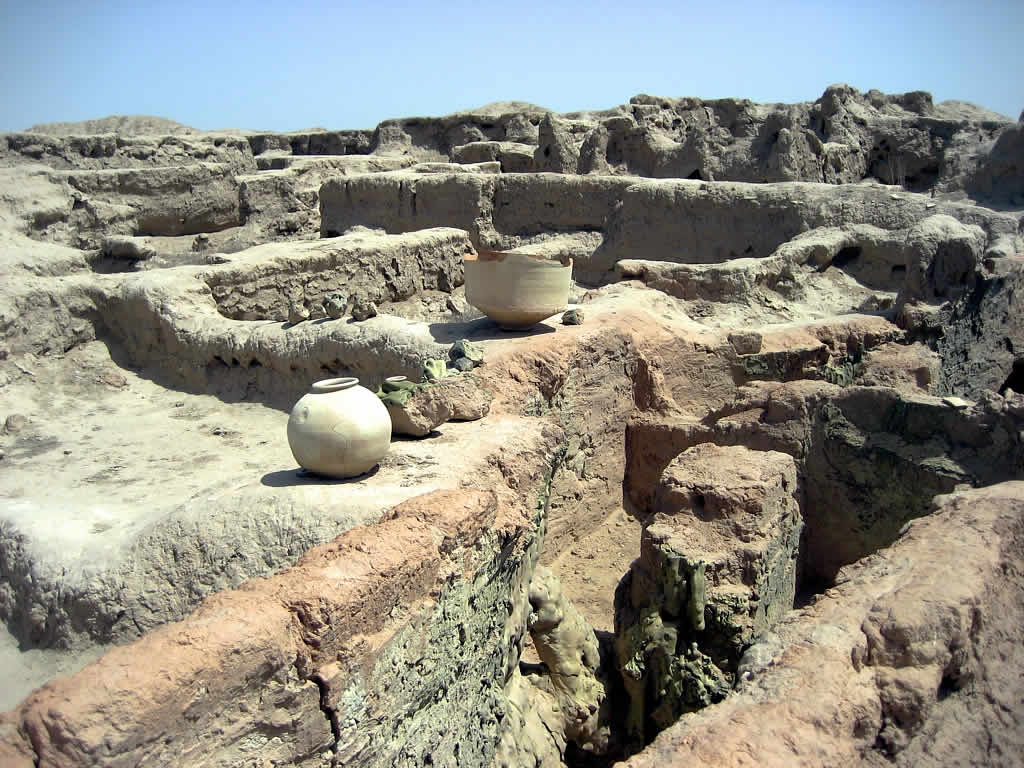
Constructed and inhabited roughly between 2400 and 1600 BCE, Gonur-Depe was the principal settlement of the Bactria-Margiana Archaeological Complex (BMAC), a sophisticated urban culture contemporary with Bronze Age Mesopotamia, Egypt, and the Indus Valley — yet, until recently, almost unknown outside specialist circles. The site was rediscovered in 1972 by the Greek-Russian archaeologist Viktor Sarianidi, whose decades of excavation in the Murghab River delta uncovered a fortified settlement spanning more than 50 hectares, complete with a palace, temple complexes, and monumental mudbrick architecture — evidence of remarkably advanced urban planning for its time.
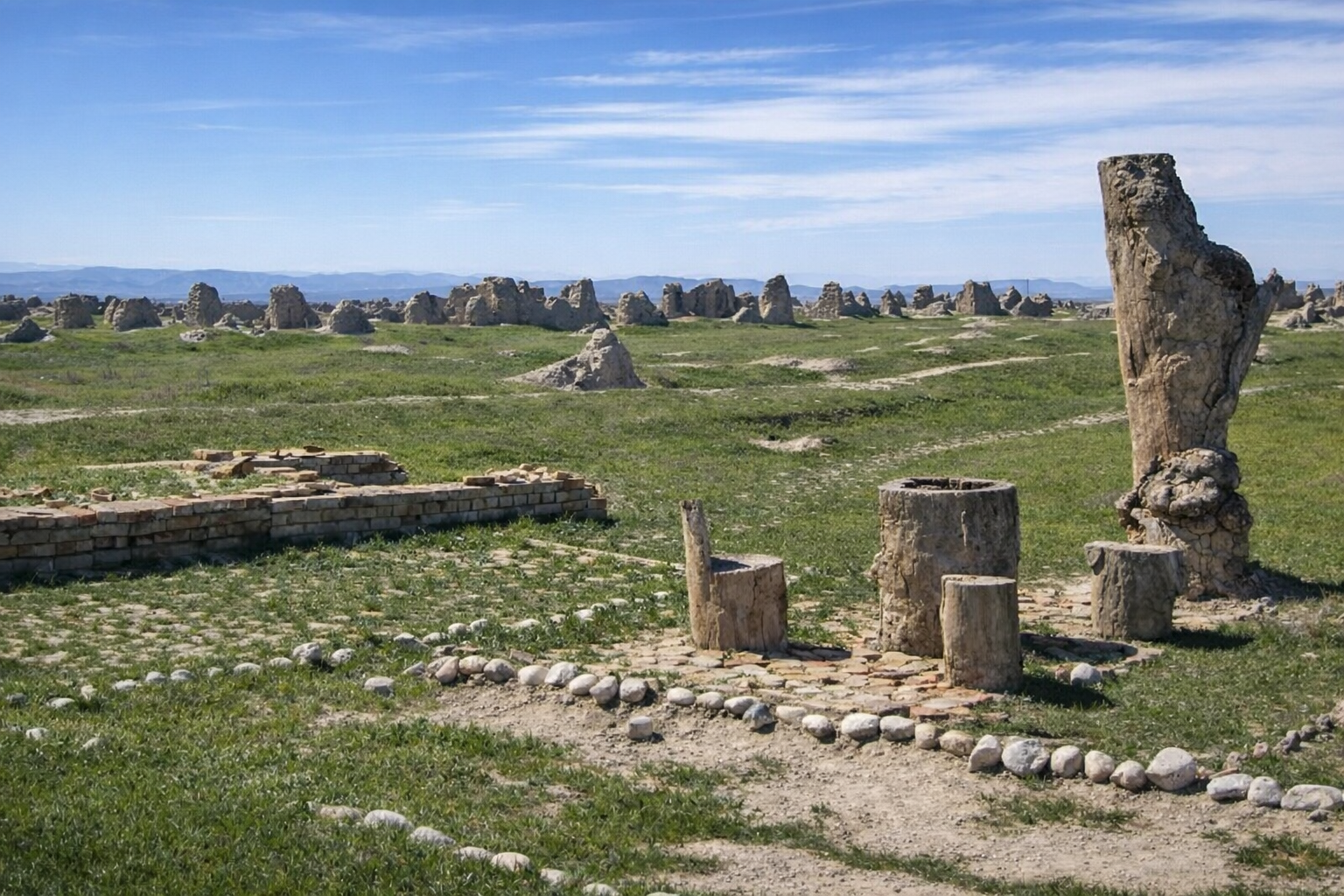
Among Gonur-Depe's most striking discoveries is its necropolis, where excavators found human burials alongside sacrificed animals and elaborate grave goods, including a 2009 find of a royal tomb containing a large bronze cauldron, a wheeled cart with bronze-rimmed wheels, and the remains of dogs. Sarianidi also identified temple structures built around fire altars, along with residues suggesting the ritual preparation of a psychoactive drink made from poppy, hemp, and ephedra. He proposed a connection between these practices and Haoma, the sacred drink described in the Avesta, the holy text of Zoroastrianism — going so far as to suggest Gonur-Depe may have been linked to the origins of that faith. It's worth noting for site content that this theory, while widely cited, remains debated among scholars rather than settled fact.
The city's decline came not from conquest but from nature: shifts in the course of the Murghab River gradually dried out the delta that sustained it, and Gonur-Depe was abandoned by around 1600 BCE, disappearing beneath the sand for over three thousand years.
Unlike Nisa, Merv, and Konye-Urgench, Gonur-Depe is not yet a full UNESCO World Heritage Site — it currently sits on Turkmenistan's UNESCO Tentative List, recognized as a site of outstanding potential value while it awaits formal inscription. For visitors, that also means it remains a raw, active excavation rather than a polished tourist site — an encounter with deep prehistory rather than a curated monument, best suited to travelers drawn to genuine archaeological discovery.
相册