The Turkmen Carpet: A People's Memory Woven Into Art
The Turkmen carpet is more than a craft object — it is the identity of a nomadic people, woven and passed down across centuries. Its roots reach back to antiquity, shaped by the Turkmen tribes using locally sourced wool and plant-based dyes, with the knowledge handed from one generation to the next.
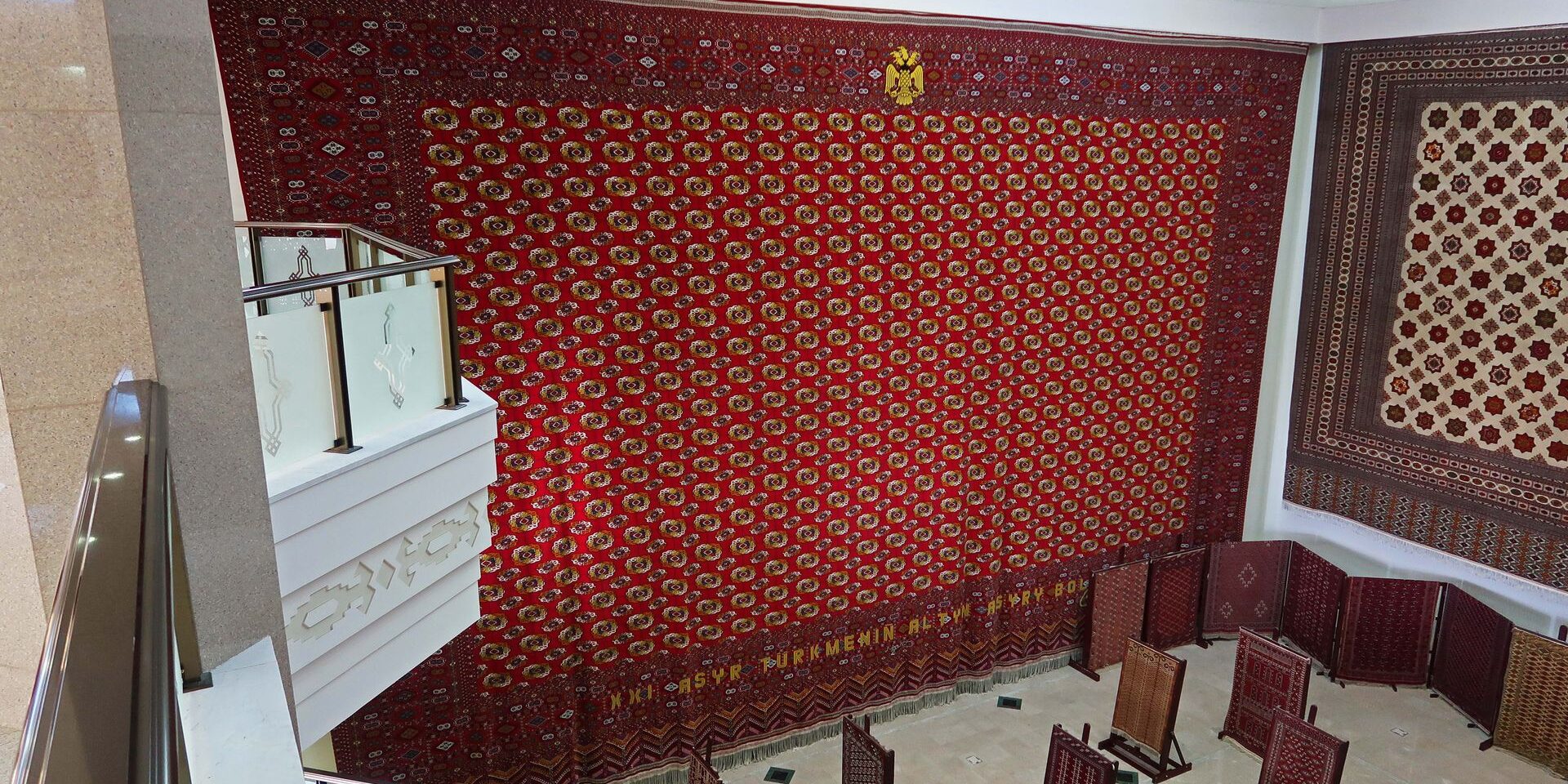
Every carpet carries the signature of its weaver's origin. The dense, richly patterned designs correspond to one of the five main Turkmen tribes, making each carpet a marker of cultural identity. At the heart of these patterns is the "gul" motif — repeating octagonal medallions that represent different tribes such as the Tekke, Ersari, Salor, and Saryk. To a trained eye, a carpet reveals not just which tribe wove it, but often the landscape that inspired its design.
By the 19th and 20th centuries, this craft had long outgrown Turkmenistan's borders, with carpets exported to Europe, Iran, Pakistan, and Turkey. During the Soviet era, carpets began serving as historical records as much as decorative art — the legendary 1935 horseback journey from Ashgabat to Moscow, for instance, was immortalized two years later in a carpet titled "The Horse Run," now held in a Moscow museum.
Its Place Today
Turkmen carpet weaving is now carefully preserved at both the cultural and state level. In 2019, the Traditional Art of Turkmen Carpet Making was inscribed on UNESCO's Representative List of the Intangible Cultural Heritage of Humanity — recognition that reflects a living tradition, not a relic. Each year, on the last Sunday of May, Carpet Day brings exhibitions and celebrations honoring the country's weavers.
Carpet motifs have also become part of Turkmenistan's modern visual identity, appearing on the national flag and as a defining element of architectural decoration. The Turkmen Carpet Museum in Ashgabat, founded in 1994, is the most tangible home of this heritage, housing a collection spanning from the 18th century to the present and bringing together pieces from different tribes.
What It Means for Visitors
For a European traveler, the Turkmen carpet is far more than a souvenir — it's a readable map of how a nomadic civilization related to nature, belonging, and time. Walking through the museum in Ashgabat, or watching a weaver's hands tie knot after knot in a workshop, adds a tactile, lasting dimension to the Central Asian experience.